Weight limits
Manual handling weight limits by country: what the law says about 25 kg and 50 kg sacks
Compiled from public standards and manufacturers' published data.
Plants that lift 25 kg and 50 kg sacks by hand ask the same question in every country: is it still allowed? The answer differs by country, by sex of the worker, by how often the lift happens and by whether the figure is a law, a regulation or a guideline. This page collects the limits for one person lifting without mechanical aid, with the name of the rule and its status, as of October 2026. It is not legal advice; your EHS team or adviser decides what applies to a workstation. It is written for plants in the load types we handle.
How to read lifting limits
Four rules of reading apply to every row below. First, tell law from guidance: a law "sets" a limit, an official guideline "recommends" one, and an assessment-type rule "requires employers to avoid or assess" rather than naming a weight. Second, a limit is a ceiling, not a safe value; the recommended weight for a real task falls with posture, frequency and distance, which is what the NIOSH equation and ISO 11228-1 calculate. Third, note the version and date; several of these rules changed in the last ten years. Fourth, whether a workstation complies is decided by the employer's own risk assessment, not by the equipment.
Figures as of October 2026, checked against the primary texts where they could be reached; where a primary text was not accessible, the row says which official source was used, and where no figure could be confirmed, none is given. Rules change; check the current text before relying on a figure in a contract or an audit. A worked manual handling risk assessment example shows how the limits are applied at one station.
Latin America
| Country | Rule | Men | Women | Status | Note |
|---|---|---|---|---|---|
| Chile | Labour Code arts. 211-F to 211-J, introduced by Ley 20.001 and amended by Ley 20.949 of 2016, the 'Ley del Saco', in force 17 Sep 2017; regulation DS 63 of 2005 | 25 kg, and only where manual handling cannot be avoided and mechanical means cannot be used | 20 kg | Law | Under-18s 20 kg; pregnant workers may not do manual loading |
| Mexico | NOM-036-1-STPS-2018, published 23 Nov 2018, fully enforced since 31 Mar 2024 | 25 kg for ages 18–45 | 20 kg for ages 18–45; 15 kg over 45 | Regulation, mandatory | Pregnant and post-natal workers: no loads above 10 kg |
| Brazil | CLT art. 198 and art. 390; NR-17 ergonomics (Portaria MTP 423/2021, revised 2022) | 60 kg for one person | 20 kg continuous, 25 kg occasional | Law | NR-17 bans non-occasional lifting with the grip point at a horizontal distance of more than 60 cm and asks for technical aids first |
| Colombia | Resolución 2400 de 1979, art. 392 | 25 kg for compact loads | 12.5 kg | Regulation, mandatory, still cited | Shoulder carrying is capped separately at 50 kg for men and 20 kg for women (art. 390) |
| Peru | R.M. 375-2008-TR, Title III, items 4–6 | 25 kg in general; 15 kg with greater protection; 40 kg trained or occasional | 15 kg in general; 9 kg with greater protection; 24 kg trained or occasional | Ministerial resolution, mandatory | Above 25 / 15 kg the employer should prefer mechanical aids |
| Argentina | Resolución MTEySS 295/2003 Annex I; agriculture Decreto 617/97 art. 24 | Threshold limit values by zone, frequency and duration, at most 32 kg | Same table; it does not distinguish by sex | Mandatory; control measures are required where the threshold is exceeded | Agriculture: 50 kg or 10 m for one person before aids are required |
Next step: the practical consequence for sack palletising is on the vacuum bag lifter for 25 kg sacks page.
Europe
The EU directive on manual handling, 90/269/EEC, sets no kilogram figure; it asks employers to avoid manual handling with mechanical equipment where possible and to assess what remains, and each member state has transposed it in its own way.
| Country | Rule | Men | Women | Status |
|---|---|---|---|---|
| Poland | Regulation of 14 Mar 2000 on manual transport work, consolidated text Dz.U. 2018 poz. 1139, § 13 | 30 kg routine, 50 kg occasional | 12 kg routine, 20 kg occasional | Regulation, mandatory; 'occasional' means at most 4 times an hour and at most 4 hours a day in total, so line palletising usually counts as routine |
| Germany | Load Handling Ordinance 1996 § 2; key indicator method for assessment; Maternity Protection Act § 11(5) | No statutory figure; assessment by scoring | Same; pregnant workers: no regular lifting above 5 kg or occasional above 10 kg without aids | Assessment-type, with mechanical equipment named as the way to avoid manual handling |
| France | Labour Code R4541-9 | Regular loads above 55 kg only with medical clearance, never above 105 kg | 25 kg | Law |
| Spain | Royal Decree 487/1997; INSST technical guide, 2nd edition 2024 | Guide: 25 kg in ideal conditions for men aged 20–45; above 25 kg may be unacceptable in itself | 20 kg in ideal conditions | Decree sets no figure; the 2024 guide replaced the older 25/15/40 kg values, so quote the edition |
| United Kingdom | Manual Handling Operations Regulations 1992; HSE guidance screening values | 25 kg close to the body at knuckle to elbow height | 16 kg | Regulations with guidance values; the values are screening values, not a legal ceiling |
Asia
| Country | Rule | Men | Women | Status |
|---|---|---|---|---|
| Thailand | Ministerial regulation of 2004 (B.E. 2547) under section 37 of the Labour Protection Act; section 39 (as amended in 2008) for pregnant workers | 55 kg; boys aged 15–18: 25 kg | 25 kg; girls aged 15–18: 20 kg; pregnant workers: no loads above 15 kg | Regulation, mandatory; the 2004 figures are taken from an official Department of Labour Protection and Welfare summary, as the Royal Gazette text was not accessible |
| Malaysia | DOSH Guidelines for Manual Handling at Workplace 2018, Figure 5.2 | 25 kg close to the body between knuckle and elbow height; 15 kg at arm's length | 16 kg close to the body between knuckle and elbow height; 10 kg at arm's length | Guideline, not law; the guideline says these values are not safe or maximum limits, and reduces them for frequency (for example by 50% at 5–8 lifts a minute) and for twisting (by 20% at 90°) |
| Vietnam | Circular 10/2020/TT-BLĐTBXH of 12 Nov 2020, in force 1 Jan 2021, Appendix Part I | No general figure found | Carrying more than 50 kg is on the list of work with adverse effects on women's reproductive health (Section 1, item 31); more than 20 kg for workers who are pregnant or nursing a child under 12 months (Section 2, item 25) | Mandatory disclosure: the employer must inform workers of these jobs and the worker decides whether to take them; the list is not an outright ban |
| South Korea | Enforcement Decree of the Labour Standards Act, Annex 4 (amended 19 Nov 2021); Ministry of Employment and Labor notice 2020-12 on musculoskeletal burden work, art. 3 no. 8 | Lifting 25 kg or more 10 or more times a day is designated burden work and triggers a hazard investigation | Same; pregnant workers 5 kg continuous, 10 kg intermittent | Mandatory; short-term and intermittent work are excluded from the burden-work definition |
| Japan | Women's and young workers' labour standards rules; guideline on preventing low back pain at work, revised 2013 | Guideline: about 40% of body weight | Prohibited for women aged 18 and over: 20 kg or more in continuous work, 30 kg or more in intermittent work; aged 16 to under 18: 15 / 25 kg; under 16: 8 / 12 kg | Women's and young workers' rules mandatory; the 40% figure is a guideline |
| China | Special Provisions on Labour Protection of Female Employees, State Council Order 619 of 2012 | No general figure | Prohibited: lifting more than 20 kg at 6 or more lifts an hour, or more than 25 kg per lift in intermittent work | Mandatory for female employees; the old national standard GB/T 12330-1990 was withdrawn in 2004 |
Indonesia, Singapore, the Philippines and India have rules under verification and are not listed with figures here.
Middle East, Turkey and Africa
No official kilogram limit was found for Saudi Arabia or the United Arab Emirates: Saudi Arabia's labour regulations list heavy work and manual handling as high-risk activities without a weight figure, and Abu Dhabi's ADOSH-SF Code of Practice 14.0 on manual handling and ergonomics (version 4.0, July 2024) requires a risk assessment rather than setting a limit. In practice, projects in these markets are often assessed with the NIOSH lifting equation, ISO 11228-1 and the owner's own HSE standards. Turkey's manual handling regulation of 24 July 2013 transposes the EU directive, and South Africa's Ergonomics Regulations of 6 December 2019 require an ergonomic risk assessment and the hierarchy of controls; neither sets a kilogram limit.
North America and Oceania
The United States has no OSHA weight standard; the NIOSH lifting equation, an assessment tool, uses a load constant of 23 kg as the ceiling under ideal conditions, and California's repetitive motion rule requires a programme once two or more related injuries occur in twelve months; what that means in practice is on OSHA lifting weight limit. Canada's federal and provincial rules are mostly assessment-type. In Australia, the Safe Work Australia model Code of Practice on hazardous manual tasks (October 2018 edition) sets no kilogram limit and manages the risk through a hierarchy of control; its examples of mechanical aids include vacuum or magnet assisted lifters, and whether the code has legal effect depends on the state or territory. The NIOSH lifting equation calculator applies the equation to one lifting task.
25 kg and 50 kg sacks against the limits
| Country or basis | Limit (men / women) | 25 kg sack | 50 kg sack |
|---|---|---|---|
| Chile | 25 / 20 kg | Men at the ceiling, and only where mechanical means are shown impractical; women above | Above the limit |
| Mexico | 25 / 20 kg; women over 45: 15 kg | Men 18–45 at the ceiling; women above | Above the limit |
| Brazil | 60 / 20 kg continuous, 25 kg occasional | Men within the limit, subject to NR-17; women in continuous work above | Men within 60 kg but high risk under NR-17; women above |
| Colombia | 25 / 12.5 kg | Men at the ceiling; women at twice the limit | Above the limit |
| Peru | 25 / 15 kg | Men at the ceiling; women above; mechanical aids to be preferred | Above the limit |
| Poland | 30 routine, 50 occasional / 12 routine, 20 occasional kg | Men within; women above | Men only as occasional work; routine above; women above |
| Spain, INSST 2024 guide | 25 / 20 kg in ideal conditions | Men at the ceiling in ideal conditions; women above | May be unacceptable in itself |
| France | 55 (up to 105 with medical clearance) / 25 kg | Men within; women at the ceiling | Men within; women above |
| Thailand | 55 / 25 kg | Women at the ceiling; pregnant and 15–18-year-old women above | Women above |
| Malaysia, DOSH 2018 guideline | 25 / 16 kg | Men at the guideline value close to the body; women above | Above the guideline |
| Japan | 40% of body weight (guideline) / 20 kg continuous for women | Men of 60 kg body weight slightly above the guideline value of about 24 kg (estimate); women in continuous work above | Above |
| South Korea | 25 kg × 10 times a day | Ten or more lifts a day is designated burden work | Same |
| China, female employees | Women: more than 20 kg at 6 or more lifts an hour; more than 25 kg intermittent | Women in frequent work above; intermittent at the ceiling | Women above |
| United Kingdom, HSE screening values | 25 / 16 kg | Men at the screening value; women above | Above; detailed assessment required |
| NIOSH equation | Load constant 23 kg | Above the constant even in ideal conditions | Far above |
Reading: for most 25 kg stations the picture is "men at the ceiling, women above it", and once bending, twisting or frequency enter the calculation the recommended weight for men falls below 25 kg as well; a worked NIOSH example for a 25 kg sack gives a lifting index of roughly 5 to 6, an estimate.
What a lifter does and does not do for compliance
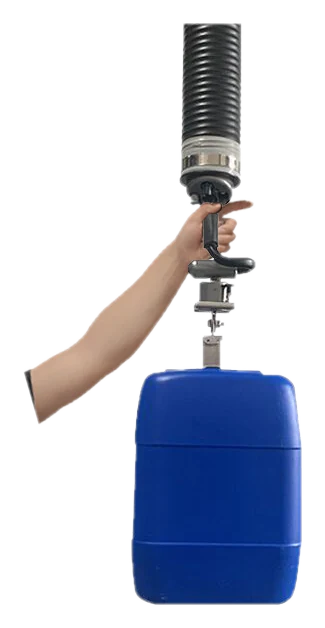
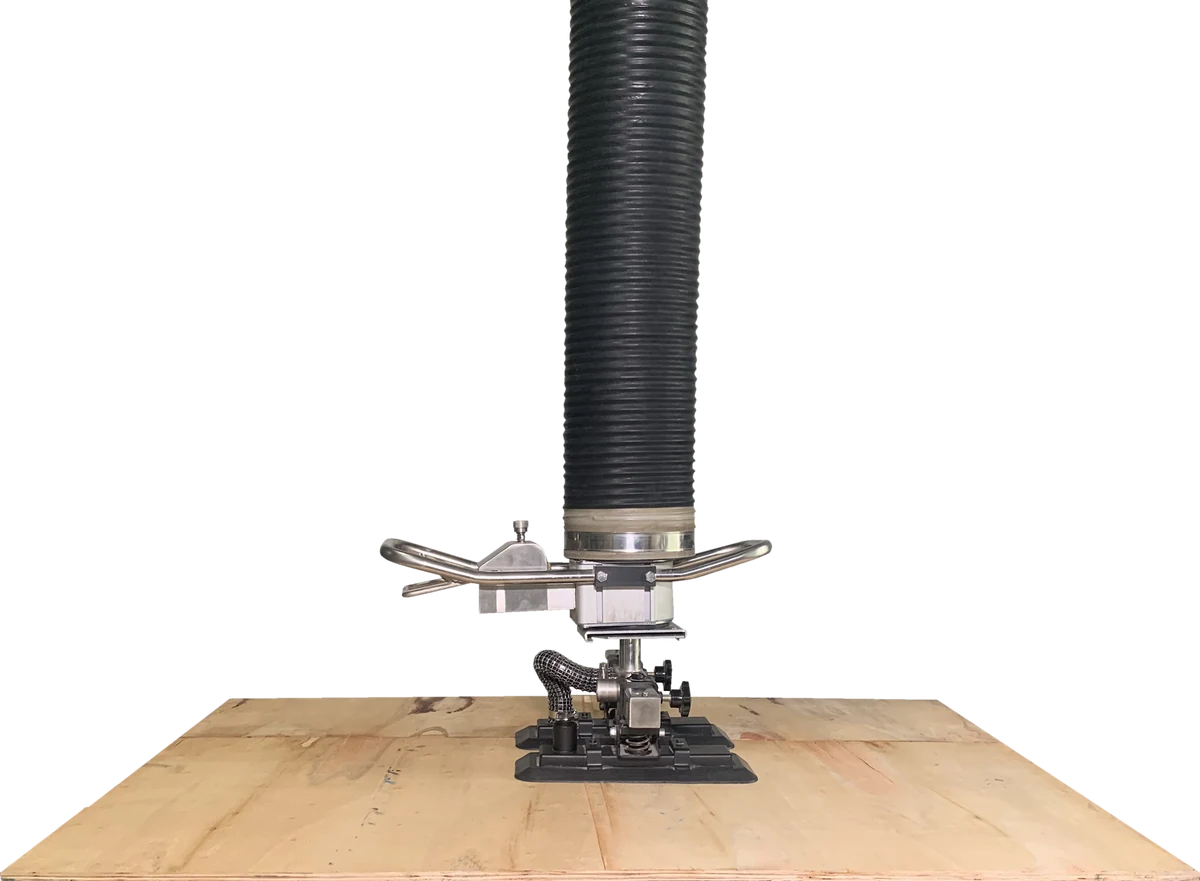
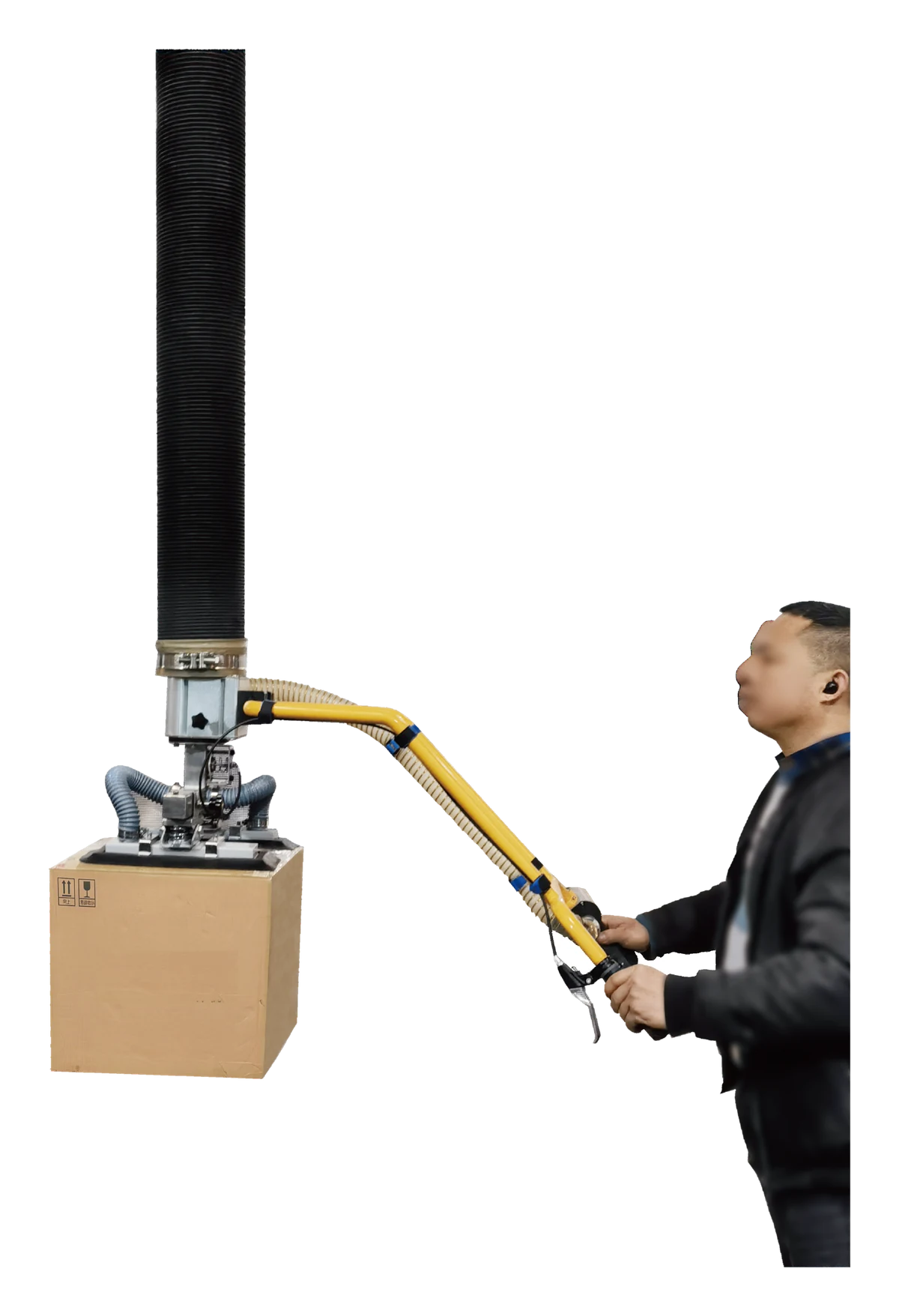
A vacuum tube lifter removes or reduces the load the operator lifts. Mechanical aids come first in the EU directive, Germany's ordinance, Chile's Labour Code and Brazil's NR-17, and Peru's rule prefers them above 25 / 15 kg. It does not make a workstation compliant by itself: the employer still assesses the task, trains the operators and arranges the periodic inspections the local rules require, and the limits for pregnant and young workers still apply to what remains of the manual work. Rules change: Chile cut its limit in 2016, Mexico's standard was fully enforced only in 2024, Spain rewrote its guide in 2024 and Brazil rewrote NR-17 in 2021, which is why this page carries a date.
Next step: the vacuum bag lifter for 25 kg sacks page shows what a lifter changes at a sack station; or Get a selection proposal for your own load.