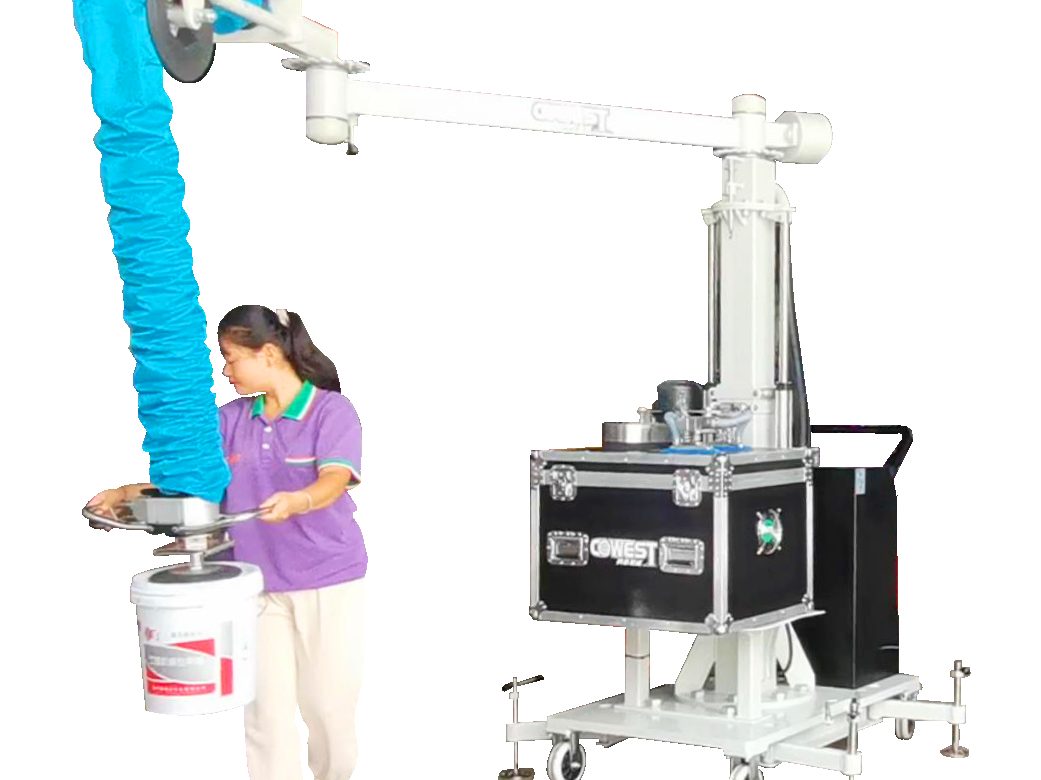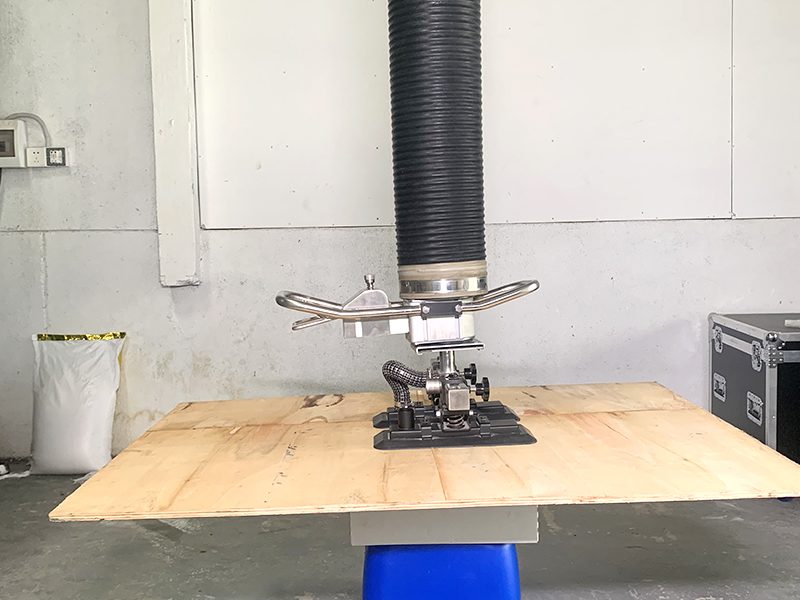
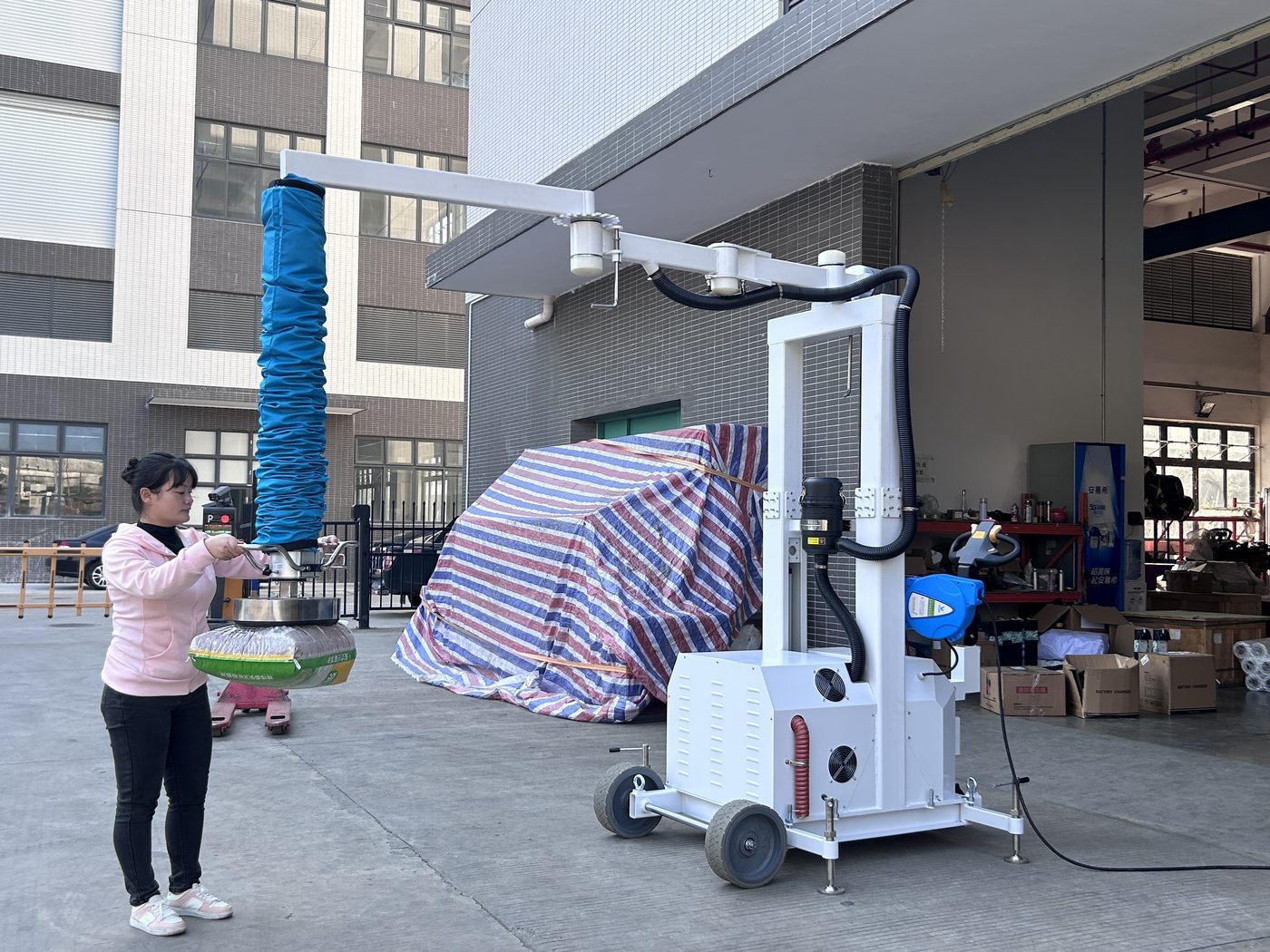
Series: ESL-SG single-handle
- Rated capacity
- 35–80 kg
- For
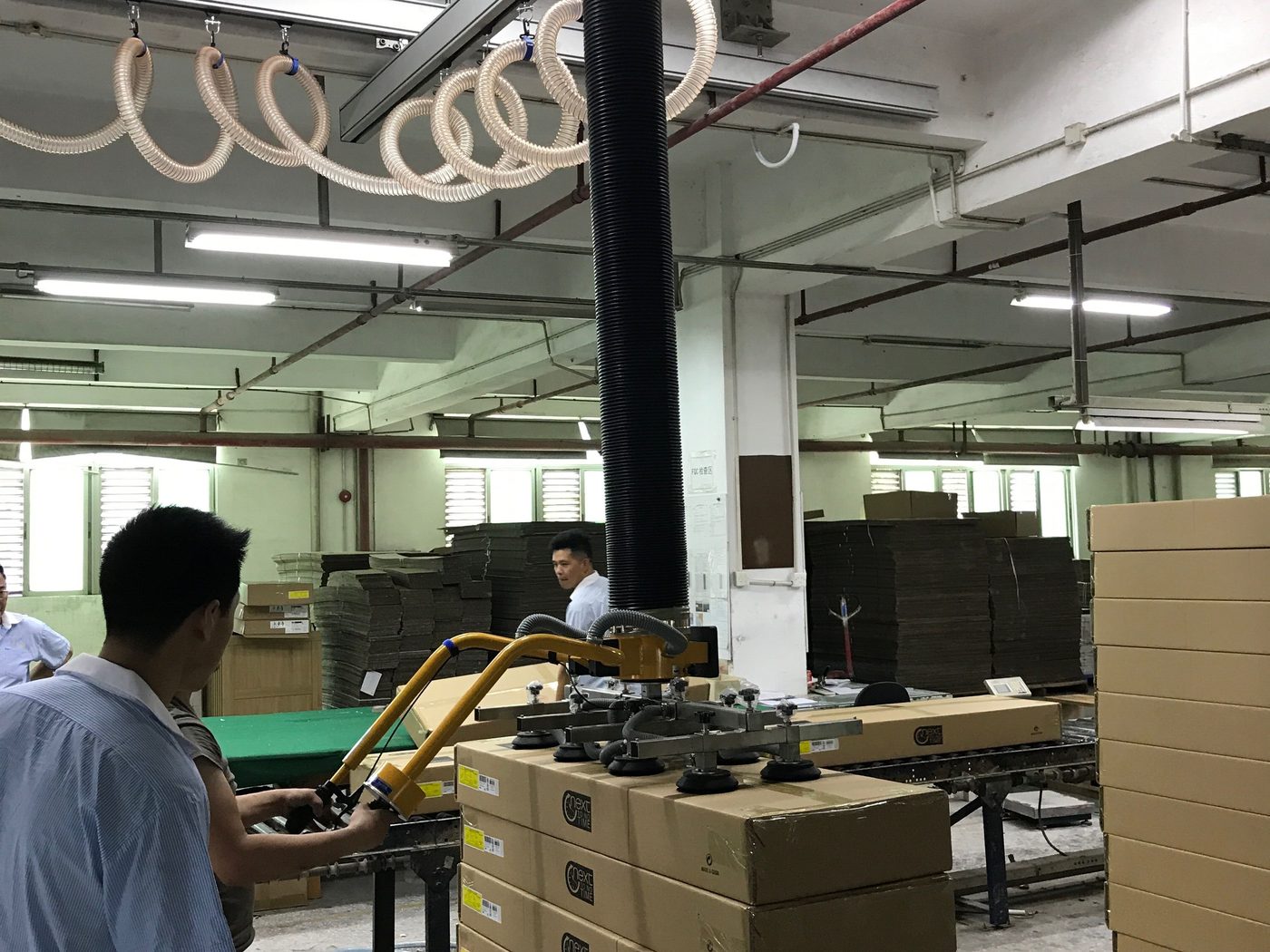
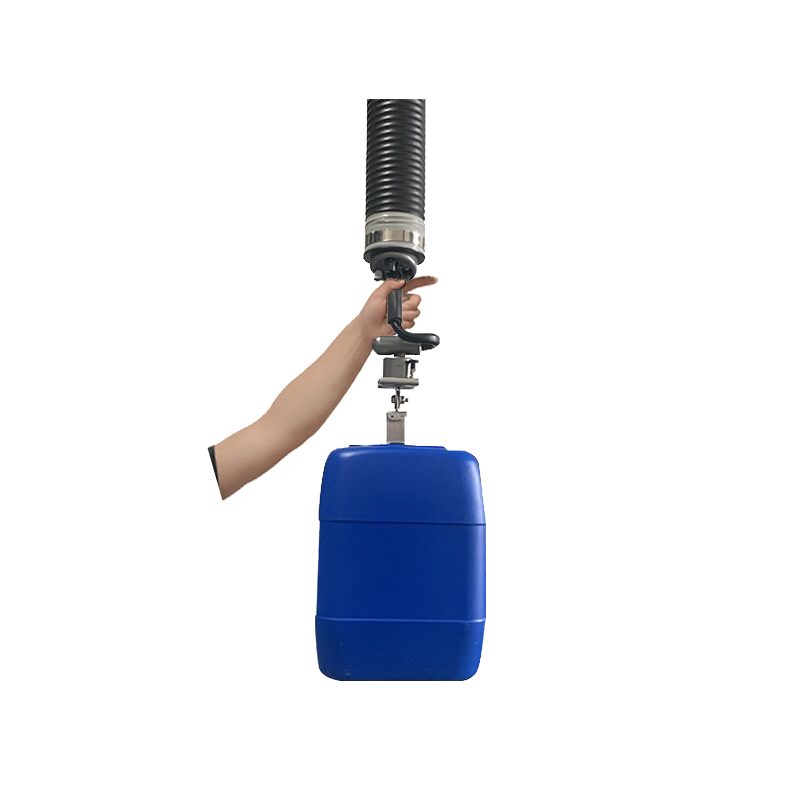
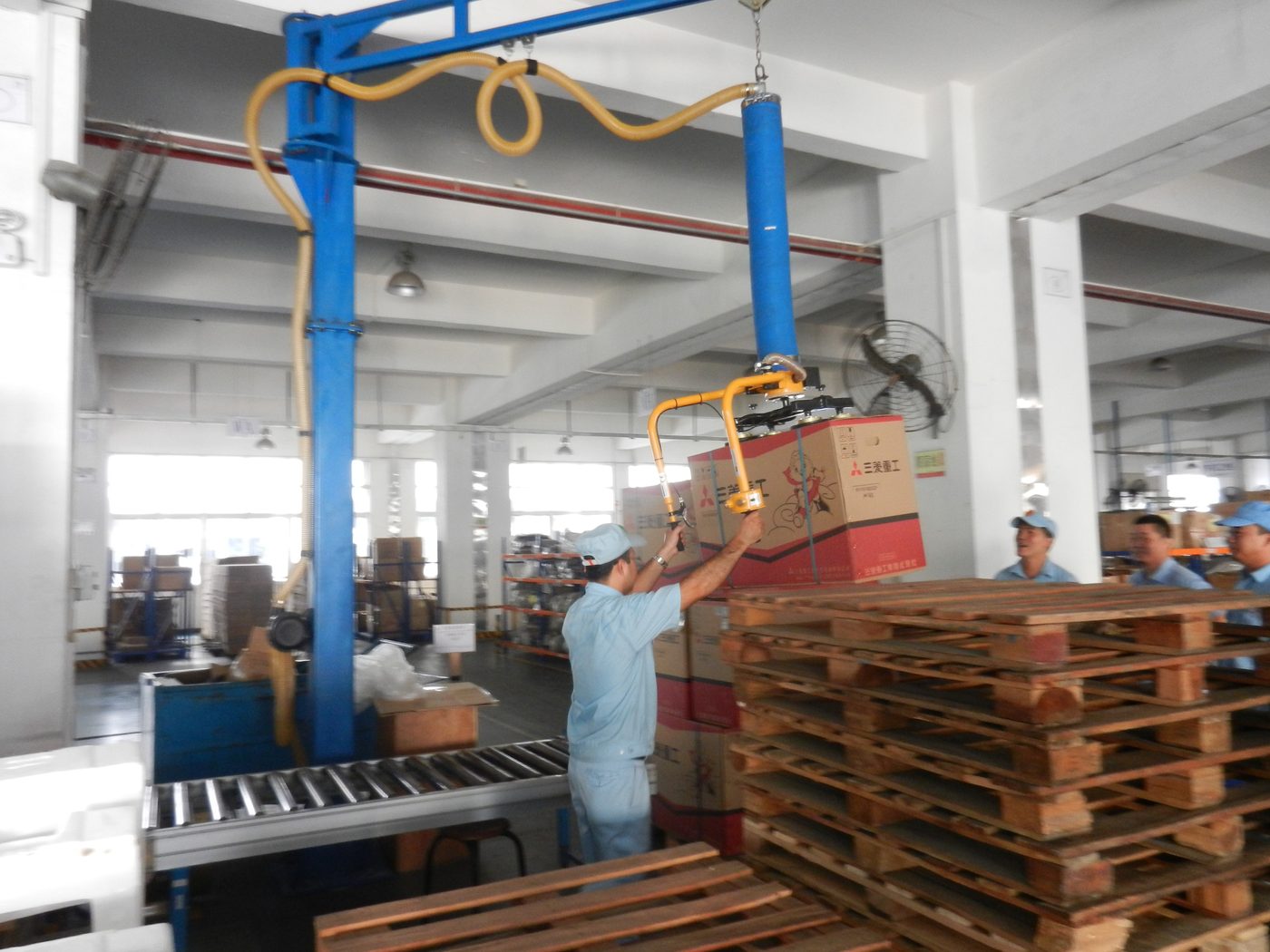
- Fast, light lifts: cartons, small sacks, pails
- Operation
- One hand on a stainless-steel handle
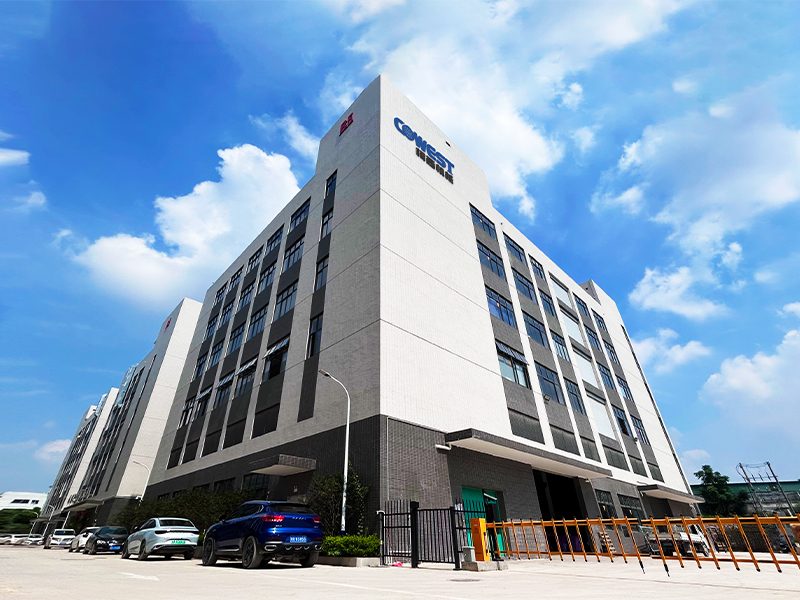
Guangdong Cowest Machinery Equipment Ltd.
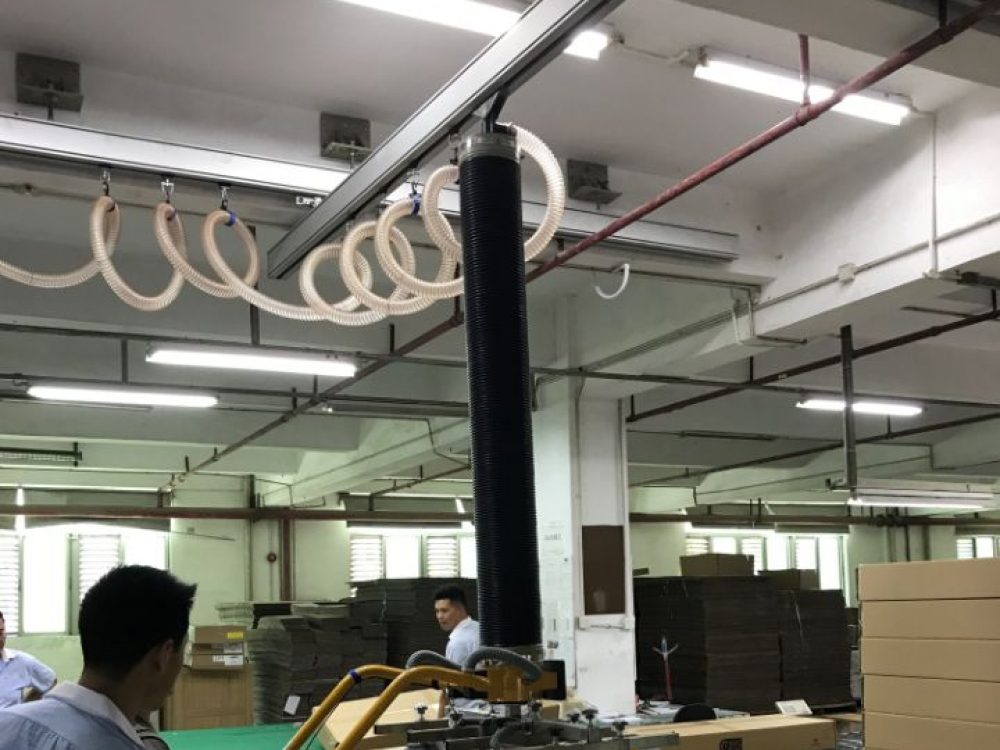
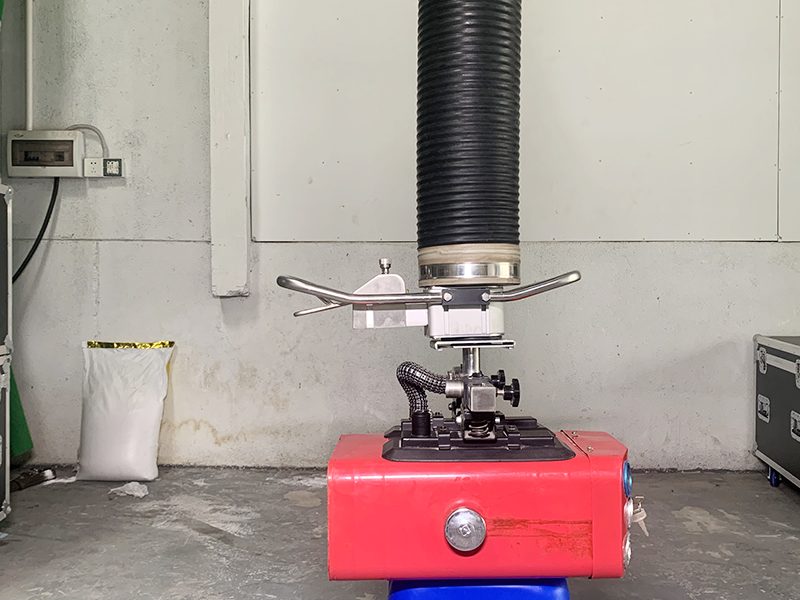
Cowest Machinery designs and manufactures vacuum tube lifters from 25 to 200 kg for sacks, cartons and drums at its factory in Qingyuan, Guangdong, China.
We also supply the pillar jib cranes, aluminium rails and mobile columns that carry them. One operator, one lift at a time, for plants and distributors in Southeast Asia, the Middle East, Latin America and beyond.
About
Cowest Machinery, founded in 2008, designs and manufactures vacuum tube lifters in a 5,000 m² factory in Qingyuan, Guangdong, China; our vacuum tube lifters are CE marked, with Attestation of Conformity No. CE-1629-01-011123 (CGS Test, valid to 2028) available on request.
The loads are sacks, cartons and drums; the plants range from food, feed and chemicals to building materials and warehousing.
Tube lifter certification
CE marked
Attestation of Conformity No. CE-1629-01-011123 · CGS Test, valid to 2028
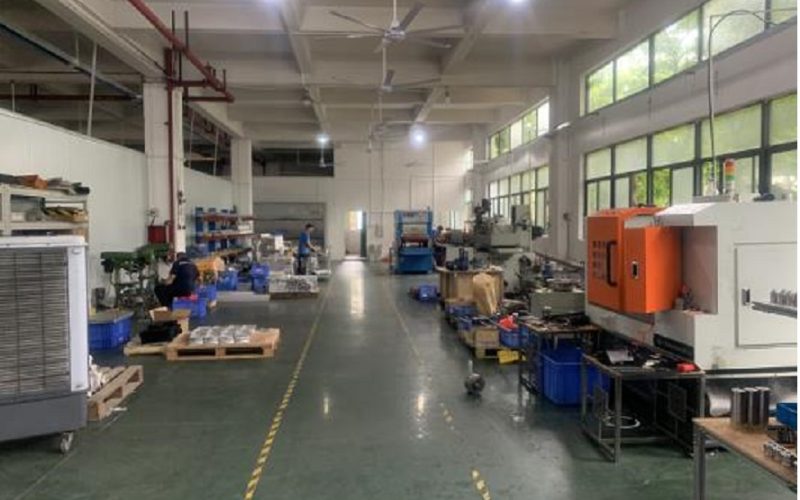
On this site you will find our vacuum tube lifters, sixteen models in four series rated from 25 to 200 kg, and the WJC jib cranes and AM rails we supply to carry them.
Four series cover the range: pick by how the operator works and how heavy the load is.
A tube lifter hangs from something that lets it travel. Our catalogue has three options for that.
The seal has to sit fully on a flat face of the load
A vacuum tube lifter has a short list of wear parts: filter cartridges, pad seals, the lifting tube and its wear cover, hoses and clamps, and the seals in the handle valve and top swivel.
Our vacuum tube lifters are CE marked, with Attestation of Conformity No. CE-1629-01-011123 (CGS Test, valid to 2028) available on request.
Each data sheet is a one-page PDF with the catalogue values of the series, dated and versioned; the configuration for your load is confirmed in the quotation.
Products
Four series cover the range: pick by how the operator works and how heavy the load is.
Rated capacities are catalogue values for airtight loads; porous loads such as unlined paper sacks are tested with samples, and a tilt job is sized on the manufacturer's tilt rating, not on these figures.
Each series, with its models and pads, is set out on the vacuum tube lifters from 25 to 200 kg overview.
| Series | Handle and movement | Models | Rated capacity | Lifting height | Vacuum source | Supply |
|---|---|---|---|---|---|---|
| ESL-SG | One stainless-steel handle | 4 | 35–80 kg, 80 kg per catalogue | 1,700 or 2,500 mm | Blower, 2.2–3.0 kW | 380 V three-phase |
| ESL-MD | Two handles; quick-release valve; tilt to order | 6 | 45–200 kg | 1,700 or 2,500 mm | Blower, 3.0–5.0 kW | 380 V three-phase |
| ESM | One-piece handle; 90° tilt; 360° rotation | 2 | 25 or 35 kg | 1,700 mm | Pump; blower option on ESM35 | 380 V three-phase |
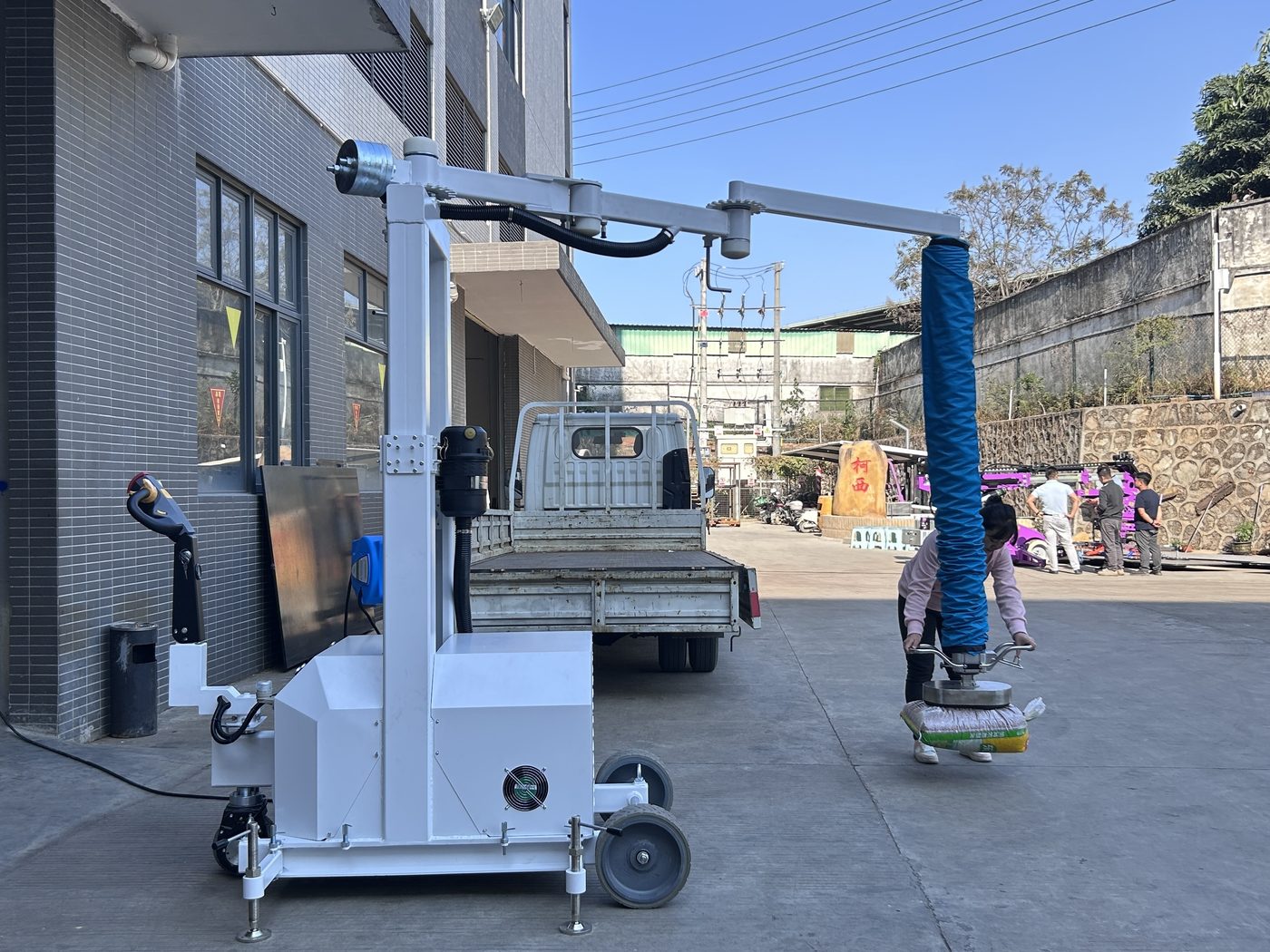
| Mobile MD / AD | Own column, 3 m arm; pushed or 5.5 km/h | 4 | 45 or 60 kg | 1,700 mm | Confirmed when quoted; 2.2–3.0 kW by model | 12 V deep-cycle battery |
| Model | Rated capacity | Lifting height | Blower power | Lifting speed | Power supply |
|---|---|---|---|---|---|
| ESL-SG120/22 | 35 kg | 1,700 or 2,500 mm | 2.2 kW | up to 0.8 m/s | 380 V three-phase |
| ESL-SG140/22 | 45 kg | 1,700 or 2,500 mm | 2.2 kW | up to 0.8 m/s | 380 V three-phase |
| ESL-SG160/30 | 60 kg | 1,700 or 2,500 mm | 3.0 kW | up to 0.8 m/s | 380 V three-phase |
| ESL-SG180/30 | 80 kg per catalogue | 1,700 or 2,500 mm | 3.0 kW | up to 0.8 m/s | 380 V three-phase |
| Model | Rated capacity | Lifting height | Blower power | Lifting speed | Power supply |
|---|---|---|---|---|---|
| ESL-MD140/22 | 45 kg | 1,700 or 2,500 mm | 3.0 kW | up to 0.8 m/s | 380 V three-phase |
| ESL-MD160/30 | 60 kg | 1,700 or 2,500 mm | 3.0 kW | up to 0.8 m/s | 380 V three-phase |
| ESL-MD180/30 | 80 kg | 1,700 or 2,500 mm | 4.0 kW | up to 0.8 m/s | 380 V three-phase |
| ESL-MD200/40 | 120 kg | 1,700 or 2,500 mm | 5.0 kW | up to 0.8 m/s | 380 V three-phase |
| ESL-MD275/50 | 150 kg | 1,700 or 2,500 mm | 5.0 kW | up to 0.8 m/s | 380 V three-phase |
| ESL-MD300/50 | 200 kg | 1,700 or 2,500 mm | 5.0 kW | up to 0.8 m/s | 380 V three-phase |
A tilt, when ordered, carries a lower rating than the figures in this table, and that rating is stated in the quotation.
Both lifting heights are offered on every model; how to work out the stroke you need from your pick and place heights is step two of the 5-step selection guide.
| Model | Rated capacity | Lifting height | Handle | Vacuum source | Power supply |
|---|---|---|---|---|---|
| ESM25 | 25 kg | 1,700 mm | One-piece, 90° tilt, 360° rotation | 40 m³/h vacuum pump | 380 V three-phase |
| ESM35 | 35 kg | 1,700 mm | One-piece, 90° tilt, 360° rotation | 60 m³/h pump or 2.2 kW blower | 380 V three-phase |
| Model | Rated capacity | Drive | Column | Overall height | Arm | Lifting height | Power | Battery |
|---|---|---|---|---|---|---|---|---|
| MD-ESM | 45 kg | Pushed | Fixed or lifting | 2,800 mm fixed; 2,100–2,750 mm lifting | 3 m | 1,700 mm | By model, see note | 12 V deep-cycle |
| MD-SG | 60 kg | Pushed | Fixed or lifting | 2,800 mm fixed; 2,100–2,750 mm lifting | 3 m | 1,700 mm | By model, see note | 12 V deep-cycle |
| AD-ESM | 45 kg | Self-propelled, 5.5 km/h | Fixed or lifting | 2,800 mm fixed; 2,100–2,750 mm lifting | 3 m | 1,700 mm | By model, see note | 12 V deep-cycle |
| AD-SKG | 60 kg | Self-propelled, 5.5 km/h | Fixed or lifting | 2,800 mm fixed; 2,100–2,750 mm lifting | 3 m | 1,700 mm | By model, see note | 12 V deep-cycle |
Configuration
The pad has to suit both the load and the series, because each series has its own listed tooling.
Where the table leaves a gap, the pad for your load is agreed with us before the order; airtight loads seal easily, while porous ones need more airflow and a softer seal.
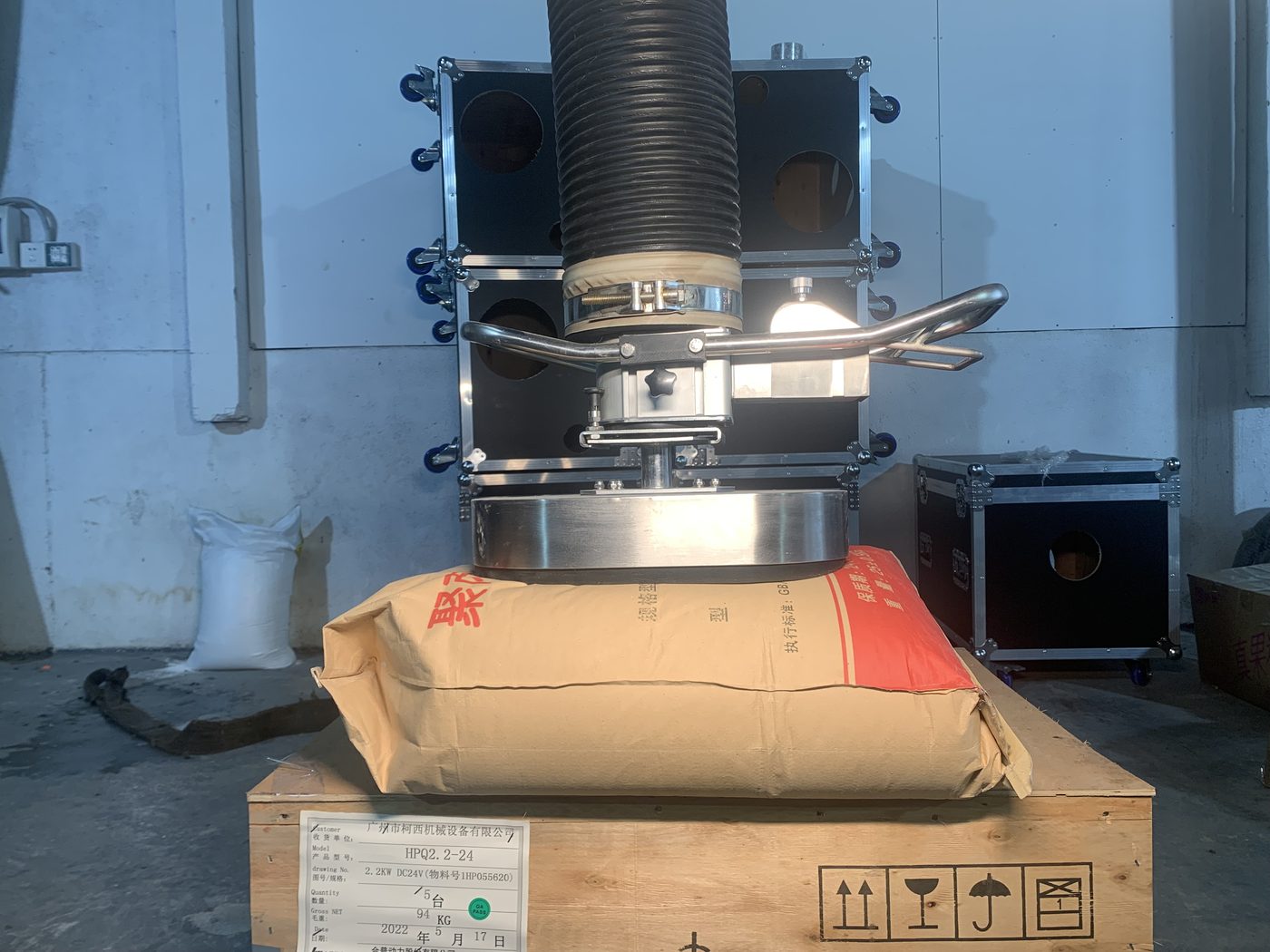
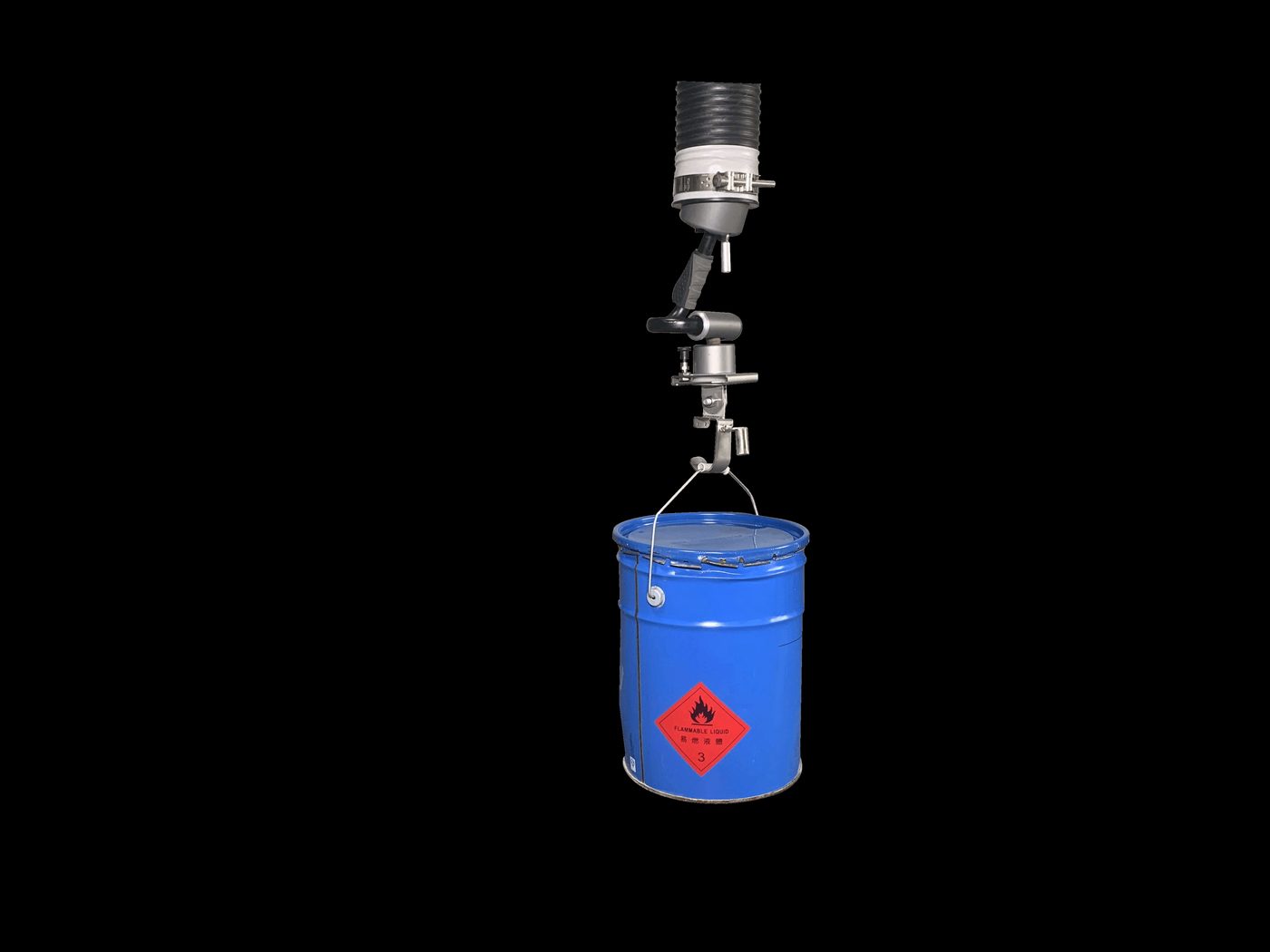
| Series | Cartons | Sacks | Drums and pails |
|---|---|---|---|
| ESL-SG | SFD / HB carton pads | SUS190×290R on the 120/22; SUS230×380R on the rest | HB bellows pads |
| ESL-MD | SFD / HB carton pads | SUS230×380R up to the 180/30; larger models in the quotation | Round drum pads, 140/22 to 180/30 |
| ESM | SFD / HB carton pads | None listed | SHP hook, pails with a handle only |
| Mobile MD / AD | Confirmed in the quotation | Confirmed in the quotation | Confirmed in the quotation |
Three of the four series hang from a crane or rail; the fourth brings its own column.
ESL-SG, ESL-MD and ESM units take a 380 V three-phase supply as standard; a different voltage or 60 Hz can be asked for with the enquiry, and the factory says whether it can supply it. The mobile units run on their own 12 V deep-cycle batteries instead.
The vacuum source is a blower on the ESL-SG and ESL-MD and a pump on the ESM, with a blower as the ESM35's catalogue alternative; on the ESM and on the mobile units, the source fitted to your unit is confirmed in the quotation.
| Series | Mounted on | Sized in the proposal |
|---|---|---|
| ESL-SG | WJC jib crane or AM rail | Crane class from the full suspended weight |
| ESL-MD | WJC jib crane or AM rail | Crane class from the full suspended weight |
| ESM | WJC jib crane or AM rail | Crane class from the full suspended weight |
| Mobile MD / AD | Its own column, 3 m arm | No crane needed |
Applications
The load decides the pad, the series and often whether vacuum is the right method at all: airtight loads lift at the rated capacity, porous sacks and cartons at less, and some bags are tested before anyone quotes them.
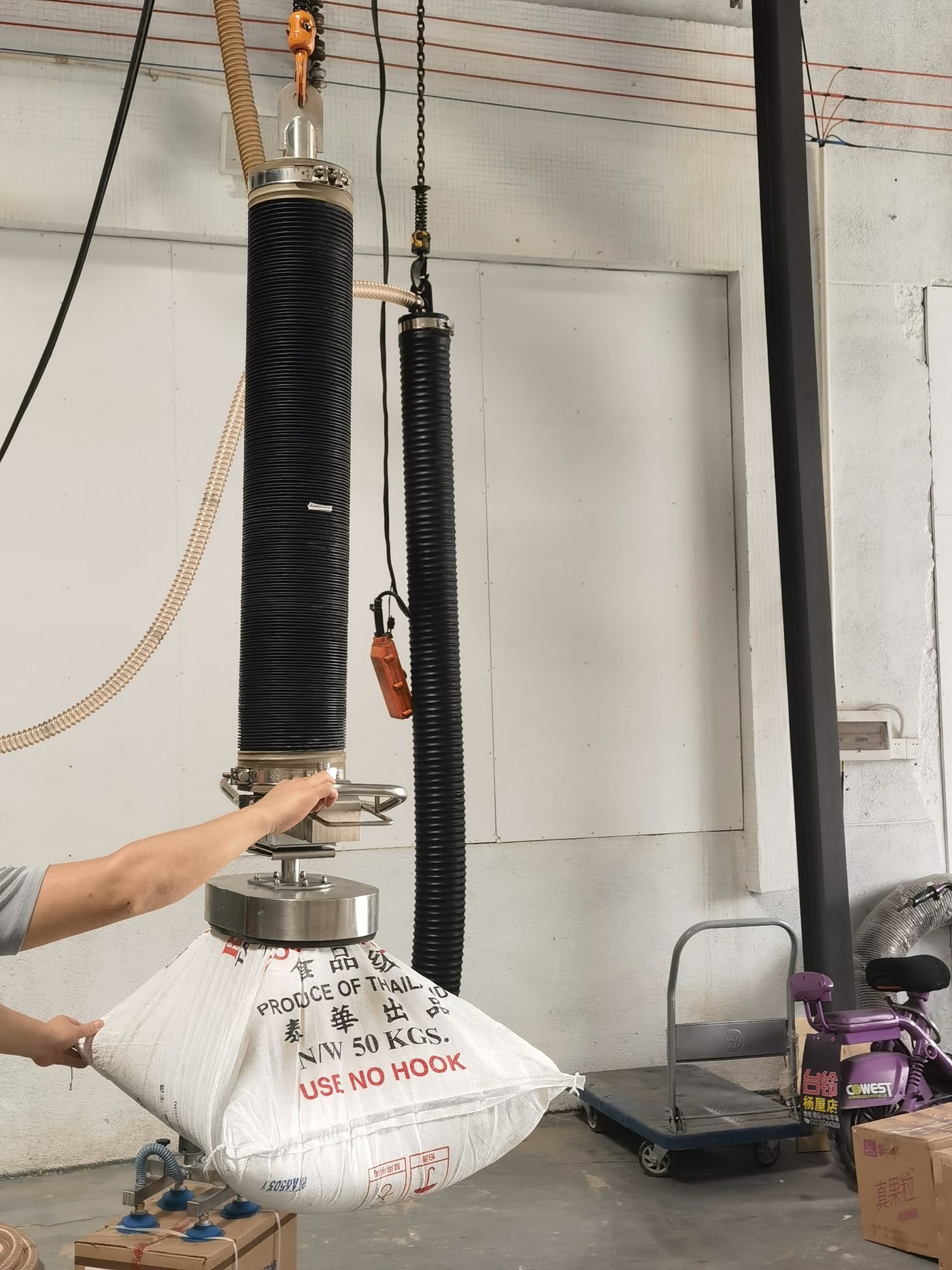
Load types and where to go
Start here
Vacuum bag lifter for 25–50 kg sacks
Weight range we cover
25–50 kg sacks
Recommended series
Fast 25 kg work on the single-handle ESL-SG; 25–50 kg, and a 90° tilt to order, on the two-handle ESL-MD, with the tilt rating stated in the quotation
Pad
Sack pads SUS190×290R / SUS230×380R; the pad for the ESL-MD200/40 and above, and any support mesh for slack sacks, is confirmed in the quotation
Note
Paper, PE and laminated woven sacks; porous sacks are sample-tested
Start here
Weight range we cover
Cartons to about 90 kg (semi-porous, sized at 75% of rated capacity)
Recommended series
ESM compact (rated 25–35 kg) for cartons to about 26 kg; ESL-SG single-handle (rated 35–80 kg, 80 kg per catalogue) to about 60 kg; ESL-MD for heavy cases
Pad
Carton pads SFD / HB; a double pad for split tops is the usual industry solution, ask us
Note
Single-handle units for picking; pad choice for taped and split-lid cartons; open-top boxes usually need a fork or tray tool instead
Start here
Weight range we cover
Drums up to 80 kg rated; heavier drums: ask us; pails on the ESL-SG and ESM
Recommended series
ESL-MD140 to 180 for drums; ESL-SG with bellows pads for drums and pails; ESM with hook SHP for pails, protection valve confirmed in the quotation
Pad
Round shaped drum pads; HB bellows pads; stainless-steel hook SHP
Note
Top-lift round pads on ESL-MD140/22 to 180/30, rated 45–80 kg; bellows pads on the ESL-SG and a stainless-steel hook on the ESM for pails; tell us the full drum weight
Start here
Ask us
Weight range we cover
Ask us
Recommended series
Tell us panel size, thickness, material and whether it must be turned vertical; we confirm before quoting whether an ESL-MD setup can do it
Pad
Pad configuration confirmed by the factory; double or four-pad yokes are the usual industry solution
Note
Not in our standard pad catalogue; we confirm whether a pad can be supplied for your panel size and material
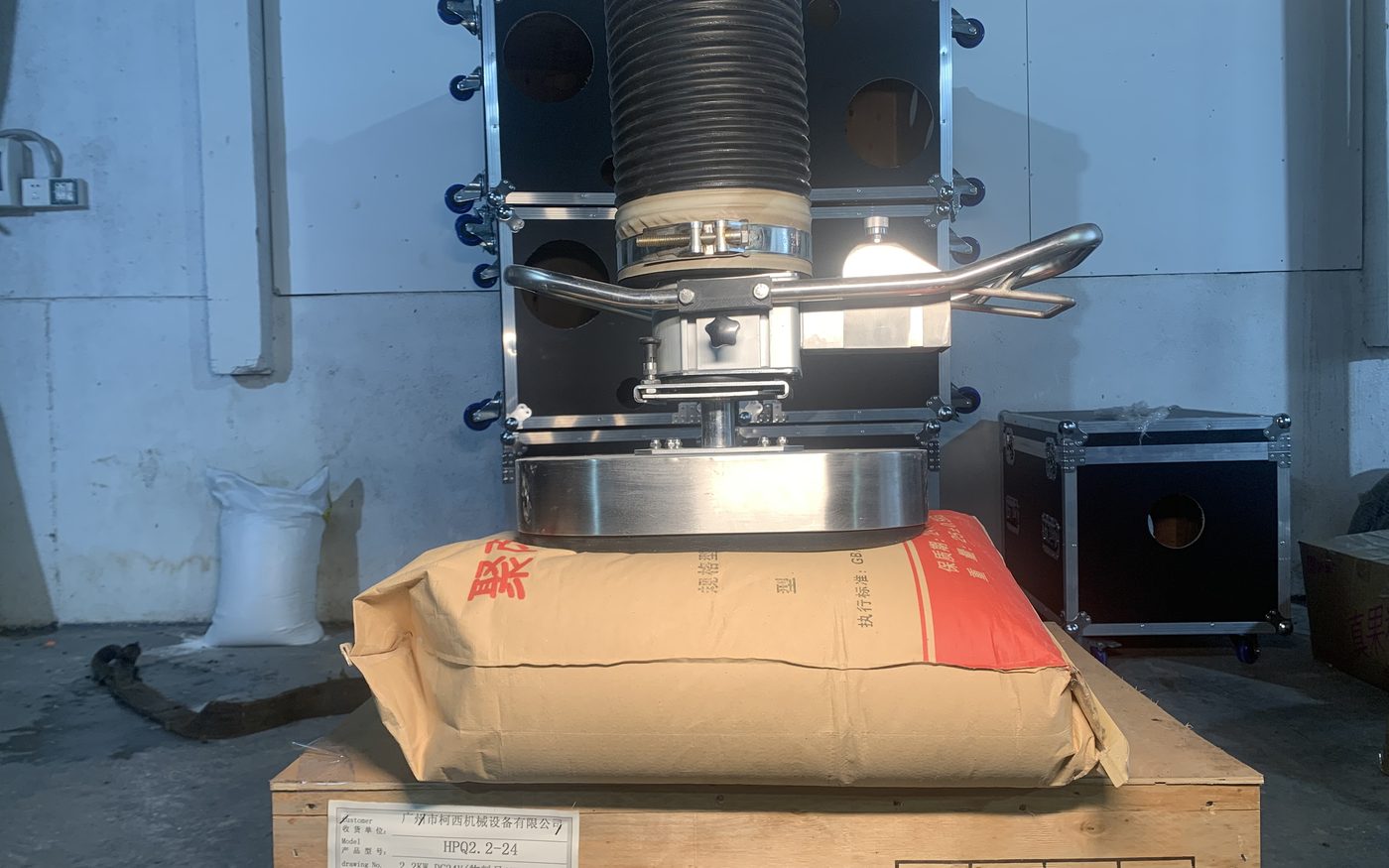
Sacks and bags, 25–50 kg
Read more Cartons, cases and totes
Read more Drums
Read more Sheets and panels
Read morePorosity is the first question in every enquiry because a vacuum tube lifter grips and lifts with the same airflow: every leak through the load surface costs capacity and speed.
| Class | Typical loads | Typical usable capacity (industry estimate, share of rated) | Selection consequence |
|---|---|---|---|
| Airtight | Film bags, sheet steel, film-wrapped units, drums other than fibre | 100% | Standard pad; sized on the catalogue value |
| Semi-porous | Cartons, lined paper sacks, coated woven bags | 75–90% | Good seal; moderate derating |
| Porous | Unlined multi-wall paper sacks, chipboard | 50–80% | More airflow, which on the ESL range means choosing the model, since each has its own 2.2–5.0 kW blower; a larger pad and soft seal; sample test |
| Highly porous | Uncoated woven PP bags, jute, cloth bags | Often not on vacuum alone | Sample test; if vacuum fails, a mechanical gripper is the usual industry answer |
Treat these as planning figures rather than test results: before any quotation for a porous load we test your samples, and the quotation names the class its ratings assume. The physics of the leak is explained for porous paper and woven sacks. Next step: if the class is unclear, a photo of the load and its packaging through send us your load details is the quickest start, with the sample test below for anything a photo cannot settle.
Saying what does not work saves everyone a quotation.
| Case | Why | Usual alternative (industry practice) |
|---|---|---|
| Uncoated woven, jute, cloth and laundry bags | Too much air leaks to build and hold vacuum | Sample test; otherwise a mechanical bag gripper |
| Oily, wet, dusty or dirty surfaces | Loose material breaks the seal; drops have happened in the industry | Clean the surface; oil-resistant pads with friction pads; mechanical clamping |
| Sharp edges and abrasive loads | They cut the seal and can tear the lifting tube, which can drop the load | Wear-resistant seals, edge protection, mechanical clamping |
| Single items above about 300 kg | Beyond the normal range of tube lifters; our range ends at 200 kg | Vacuum lifting devices (vacuum lifting beams), outside this range |
| Hot surfaces | Standard seals have limited temperature resistance | Silicone foam seals or mechanical clamping, confirmed case by case |
| Open-top boxes, shifting contents, slack sacks, off-centre loads | The seal tears or the load tips | Swivel to keep the tube vertical, support mesh, double pads, or a fork or tray tool |
| Very small items, below about 200×200 mm | Too small for the pad to seal | Small pad on a single-handle unit, or a mechanical gripper |
| Oversize panels | Beyond the size a tube lifter handles; large panels flex | Vacuum lifting device with a multi-pad beam |
| Classified explosive atmospheres | Standard units are not for hazardous zones | Standard version, not for explosive atmospheres; we do not offer explosion-proof versions. Tell us the zone in the form; if the area is classified, we say so before quoting |
| Cold stores and outdoor use | Some manufacturers specify indoor use above +5 °C only, and no cold-store or outdoor rating is published for our units | Factory confirmation in writing before quoting |
| Sites above about 1,500 m without derating | At 3,000 m only about 69% of sea-level capacity is left | Larger tube or vacuum source, derated for altitude |
| Hooks or mechanical tools without a protection valve | If the load slips, the tube snaps upward | Fit the protection valve |
The list is drawn from industry practice and incidents, not from our own test data; the alternatives are the usual industry answers, and we confirm in writing which of them we can supply before quoting. It is the reason the selection form asks about surface, packaging, temperature, zone and altitude.
Not sure which group your load is in? Choose by load type lists what vacuum handles well and what it does not.
Pricing
The price of a vacuum tube lifter is rarely the price of the lifter alone: the pad, the crane, the voltage, the spare parts and the documents decide what the quotation adds up to, and the trade term decides what is left out. This page gives the ranges seen in the market, the line items a complete quotation should carry, and what moves the number, so that you can compare quotations on the same basis.
How to lower cost without losing capacity: size the lifter from a sample test rather than adding a model for safety, choose the 1,700 mm lifting height where the stack allows, put the station in the outer part of a jib arm rather than buying a rail for one position, and order the spare-parts kit now rather than airfreighting a seal later. Next step: the selection guide explains the sizing.
| Line | What it should state | Needed |
|---|---|---|
| Lifter: vacuum generator, lifting tube, handle | Rated capacity, tube size, lifting height, generator power | Always |
| Pad or gripper | Type for your load; one in use and one spare is common | Always |
| Crane or rail | Pillar jib, wall jib or rail, with arm length and height | As required |
| Electrical | Voltage, frequency and plug standard matching the destination | Always |
| Spare-parts kit | Tube, filter cartridges, pad seals | Strongly recommended |
| Documents | Declaration of conformity, manual in the local language and any other document the market requires | Always, per market |
| Pre-shipment inspection | Third-party inspection | Recommended |
| Packing | Export plywood case | Always |
| Freight and insurance | Under CFR or CIF terms | Per trade term |
On our range the lifter line is one of the ESL-SG, ESL-MD or ESM models, the crane line a WJC pillar jib crane or AM aluminium rail, and the electrical line 380 V three-phase as standard with other voltages on request. Our vacuum tube lifters are CE marked, with Attestation of Conformity No. CE-1629-01-011123 (CGS Test, valid to 2028) available on request; the documents supplied with a specific model and market are listed in the quotation. Next step: see what carries a lifter on the lifting systems page.
| Term | Included in the price | Your side | Note |
|---|---|---|---|
| FOB | Goods on board at the Chinese port | Sea freight, insurance, import clearance and duty, inland delivery | Usual term; risk passes on loading |
| CFR | Goods plus sea freight to your port | Insurance, clearance, duty, inland delivery | Risk still passes on loading |
| CIF | Goods, sea freight and insurance | Clearance, duty, inland delivery | Risk still passes on loading |
| EXW | Goods at the factory | Everything, including export clearance | Used with care |
| DDP | Not covered on this page | — | Under DDP the seller becomes the importer of record, with the destination country's product-compliance, tax-registration and product-liability duties; ask before you plan on it |
Import duty and taxes depend on the destination country and are not part of a factory quotation; your broker gives the figure for your tariff line. Next step: tell us the port and the term you want in the enquiry.
Common practice for tube lifters bought from China is a deposit by bank transfer with the balance paid before shipment or against a copy of the bill of lading, or a sight letter of credit; new distributors and high-risk regions usually see tighter terms. Export-compliance practice is for payment to come from the contracting buyer itself. Both are industry practice, not our terms. What we offer on payment, lead time and warranty is written into the quotation for your order.
Compare on the same basis: a premium brand's price to the end user includes dealer margin, installation and service; a factory list price includes none of them. Our prices are stated in the quotation for your configuration and are not published on this page.
Market rules
For the three Latin American countries in the table, a 25 kg sack sits right at the legal ceiling for a man lifting alone and over the limit for a woman, while a 50 kg sack exceeds the limit for both. Limits differ by country: Brazil and Thailand, for example, allow men more, and some markets set no kilogram figure at all.
Rules such as Mexico's NOM-036, fully enforced since 31 March 2024, set 25 kg for men and 20 kg for women and ask employers to assess the task, not just the weight.
Three examples: limits for one person lifting without mechanical aid (men / women)
A vacuum lifter can be part of your control measures under these rules; whether a workstation complies is decided by your own risk assessment. Figures as of October 2026; sources are on the country page, and the current text should be checked before relying on a figure. Sources and dates for each country covered are listed on manual handling weight limits by country.
| Country or basis | Limit (men / women) | 25 kg sack | 50 kg sack |
|---|---|---|---|
| Chile | 25 / 20 kg | Men at the ceiling, and only where mechanical means are shown impractical; women above | Above the limit |
| Mexico | 25 / 20 kg; women over 45: 15 kg | Men 18–45 at the ceiling; women above | Above the limit |
| Brazil | 60 / 20 kg continuous, 25 kg occasional | Men within the limit, subject to NR-17; women in continuous work above | Men within 60 kg but high risk under NR-17; women above |
| Colombia | 25 / 12.5 kg | Men at the ceiling; women at twice the limit | Above the limit |
| Peru | 25 / 15 kg | Men at the ceiling; women above; mechanical aids to be preferred | Above the limit |
| Poland | 30 routine, 50 occasional / 12 routine, 20 occasional kg | Men within; women above | Men only as occasional work; routine above; women above |
| Spain, INSST 2024 guide | 25 / 20 kg in ideal conditions | Men at the ceiling in ideal conditions; women above | May be unacceptable in itself |
| France | 55 (up to 105 with medical clearance) / 25 kg | Men within; women at the ceiling | Men within; women above |
| Thailand | 55 / 25 kg | Women at the ceiling; pregnant and 15–18-year-old women above | Women above |
| Malaysia, DOSH 2018 guideline | 25 / 16 kg | Men at the guideline value close to the body; women above | Above the guideline |
| Japan | 40% of body weight (guideline) / 20 kg continuous for women | Men of 60 kg body weight slightly above the guideline value of about 24 kg (estimate); women in continuous work above | Above |
| South Korea | 25 kg × 10 times a day | Ten or more lifts a day is designated burden work | Same |
| China, female employees | Women: more than 20 kg at 6 or more lifts an hour; more than 25 kg intermittent | Women in frequent work above; intermittent at the ceiling | Women above |
| United Kingdom, HSE screening values | 25 / 16 kg | Men at the screening value; women above | Above; detailed assessment required |
| NIOSH equation | Load constant 23 kg | Above the constant even in ideal conditions | Far above |
Reading: for most 25 kg stations the picture is "men at the ceiling, women above it", and once bending, twisting or frequency enter the calculation the recommended weight for men falls below 25 kg as well; a worked NIOSH example for a 25 kg sack gives a lifting index of roughly 5 to 6, an estimate.
Weight Limits by Country| Market | Route or mark | Key standards or rules | Documents usually asked for |
|---|---|---|---|
| European Union | CE: under the Machinery Directive 2006/42/EC until 19 January 2027, under the Machinery Regulation 2023/1230 from 20 January 2027; EMC and RoHS as well | EN 13155:2020+A1:2025, EN 14238, EN ISO 12100, EN 60204-1 | EU declaration of conformity, technical file, manual in the local language, nameplate, per-unit test record |
| United Kingdom | CE recognised or UKCA for Great Britain; Northern Ireland follows EU rules; LOLER and PUWER on the user side | Supply of Machinery (Safety) Regulations 2008 | Declaration of conformity, English manual |
| United States | No federal CE-type mark; employers must use electrical equipment that is NRTL-listed or has passed a field evaluation, so buyers ask for one or the other | ASME B30.20 (applicability to tube lifters to be confirmed), ASME BTH-1, NFPA 79, NFPA 70 | NRTL mark or field evaluation report, English manual, load test certificate |
| Canada | Electrical equipment must be approved by an accredited body or special inspection | CSA C22.1 and C22.2 series | Certification or field inspection label |
| Australia and New Zealand | No single product mark; WHS duties on designers, importers and suppliers | AS 4991-2004 for below-the-hook devices including vacuum lifters | Design and risk information, manual, electrical safety to AS/NZS 3820 |
| Saudi Arabia | SABER platform; the SASO lifting equipment regulation lists heading 8428 and refers to EN 13155, so a Type 1a certificate, a supplier's declaration of conformity and a risk assessment are likely to be needed; confirm with a SABER lookup on the actual tariff code | SASO machinery safety regulations | Certificates as applicable, technical file, Arabic labels and manual (to be confirmed) |
| Brazil | NR-12 applies to manufacture, import and sale of machinery | NR-12, NR-11 | Portuguese manual, nameplate, NR-12 technical file |
The table is a summary for orientation; whether a rule applies to a given shipment should be confirmed in writing by the importer or a certification body in the destination market. The documents we supply for a specific model and market are listed in the quotation. What buyers commonly ask for, market by market, is also on the factory and documents page.
Vacuum Lifter Standards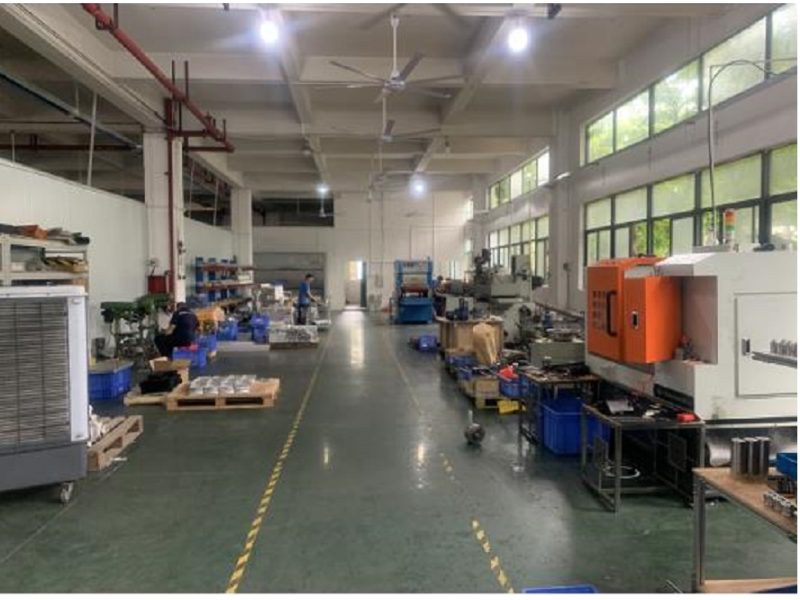
Quality and documents
In this industry a tube lifter is usually assembled from a vacuum generator, a filter, a vacuum hose, the lifting tube with its wear cover, the operator handle, the pad and a top swivel, which often carries a non-return valve, hung from a trolley. Production steps and factory test methods are not described on this page yet; they will be added once the factory has confirmed them in writing.
Our vacuum tube lifters are CE marked, with Attestation of Conformity No. CE-1629-01-011123 (CGS Test, valid to 2028) available on request. Treat the table below as a checklist of what buyers in each market tend to ask for; the quotation spells out what we send for your model and destination.
Documents buyers commonly ask for by market (industry checklist; what is supplied for your order is listed in the quotation)
Who usually asks
EU and UK buyers as a must; Saudi Arabia as a supplier's declaration of conformity (scope to be checked); Australia, New Zealand and Brazil as good practice; elsewhere if the buyer asks
Who usually asks
EU, UK, Saudi Arabia, Brazil
Who usually asks
EU, UK, Australia and New Zealand, Saudi Arabia, Brazil
Who usually asks
Every market
Who usually asks
Every market; English for the UK, US and Australia, Portuguese for Brazil
Who usually asks
Every market
Who usually asks
US and Canada as listed components; elsewhere as good practice
Who usually asks
EU and UK as a must
Who usually asks
US and Canada as a hard requirement
Who usually asks
Required for hazardous-area equipment; we do not offer explosion-proof versions, and our lifters are not for explosive atmospheres
Our vacuum tube lifters are CE marked, with Attestation of Conformity No. CE-1629-01-011123 (CGS Test, valid to 2028) available on request. The quotation lists the other documents we supply for a given model and market, including the language of the manual, and says whether a per-unit test certificate comes with the lifter. We do not state conformity to ASME B30.20 or BTH-1, and we do not offer explosion-protected versions.
Buyers in every market ask for a per-unit test certificate matched to the serial number; whether one comes with your lifter, and what it records, is stated in the quotation.
The table is a summary for orientation; whether a rule applies to a given shipment should be confirmed in writing by the importer or a certification body in the destination market. The documents we supply for a specific model and market are listed in the quotation. What buyers commonly ask for, market by market, is also on the factory and documents page.
Factory and documents
Process
From enquiry to shipment there are five steps.
you tell us what you lift, how heavy, how often and where to and from, with a photo
we propose the series, model, pad and mounting
for porous or unusual loads you send 3–5 samples and we send back the test video
configuration, lead time, warranty and payment terms are set out in the quotation
the quotation lists the documents we supply for your order
Your enquiry is logged with a reference number, checked against sanctions and end-use rules, and read by someone who sizes lifters; we come back with a model proposal or with the questions we still have, and porous or unusual loads go to a sample test before the quotation.
Porous, slippery or unusual loads are tested before we quote: three to five real items go to our factory, are lifted on the lifter and pad we propose, and the video comes back to you. The result shows how much of the rating the load keeps, which pad size suits it, and whether a support mesh or skirt seal is needed. Test conditions are agreed in advance.
The sample test
Industries
The same four load types come up in most industries; what changes is the hygiene, dust and hazardous-area requirements around them.
Key figures
Food plants typically handle 25 kg paper sacks of flour, sugar, milk powder and spices from pallet to mixer or hopper. For unlined paper sacks start from the 60 kg class with a sack pad with support mesh; a 45 kg lifter is enough for lined sacks or where the sample test shows it; at a dosing station a longer handle is often added. Two conditions apply. Flour, sugar, milk powder and spices are combustible dusts, so the area around a dump station may be classified as a hazardous zone; our lifters are the standard version and are not for explosive atmospheres, so tell us the zone classification before we quote. If the pad will touch unpacked food, say so in the form: a food-contact configuration is offered only where the manufacturer's material declarations are available.
Feed and agriculture mean 25–50 kg sacks, a high share of woven bags and seasonal peaks. Paper and laminated woven sacks run on a sack pad with a high-flow blower; uncoated woven and jute sacks often cannot be held by vacuum alone, so we test a sample first and tell you if vacuum will not hold; a mechanical gripper is the usual alternative in the industry. Whether grain and feed dust is zoned at your plant is for your safety officer to confirm.
Plastic compounders and chemical plants mostly lift 25 kg PE film bags of pellets or paper sacks of powders, often up into a mixer or reactor. PE film is airtight, so the lifter works at its rated capacity; the practical issue is that the film is smooth and the pad must sit flat on the bag. Solvent or dust zones again rule out the standard version, and corrosive products are discussed before quoting.
Building-material sacks weigh 20–50 kg depending on the country, and the environment is heavy dust with abrasive bag surfaces. For cement sacks we recommend a wear-resistant seal (natural-rubber foam is common in the industry) and a larger dust filter; seal material and filter options are confirmed in the quotation, and we suggest ordering spare seals and filter cartridges with the lifter because they wear faster here. Plain paper cement sacks are porous and are derated like other paper sacks.
Lifting systems
A tube lifter hangs from something that lets it travel. Our catalogue has three options for that.
Mounting options
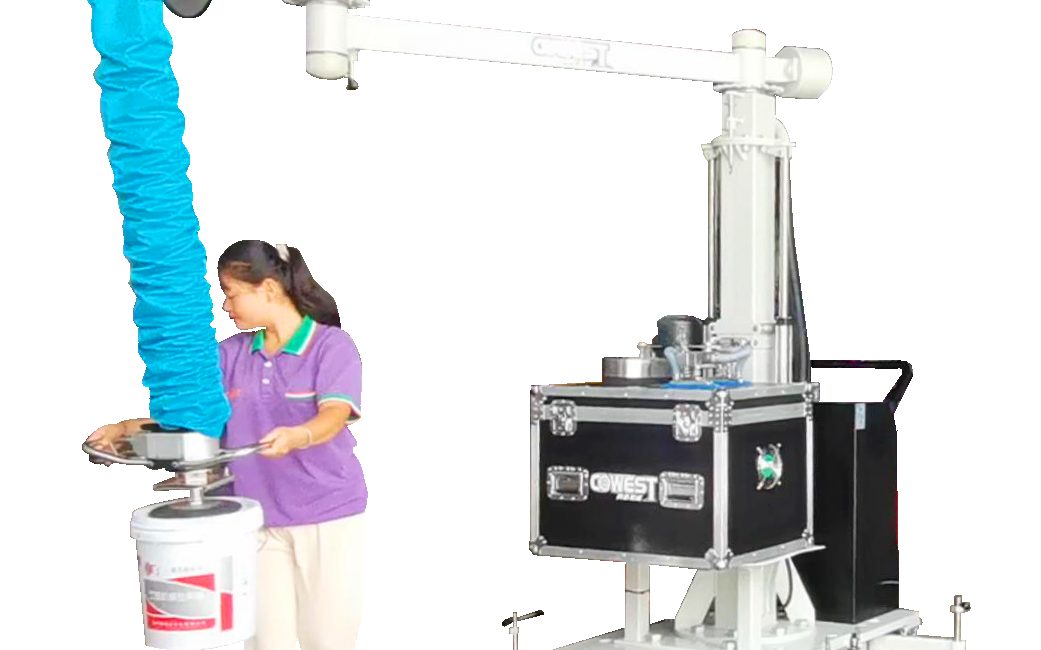
Option: Pillar jib crane
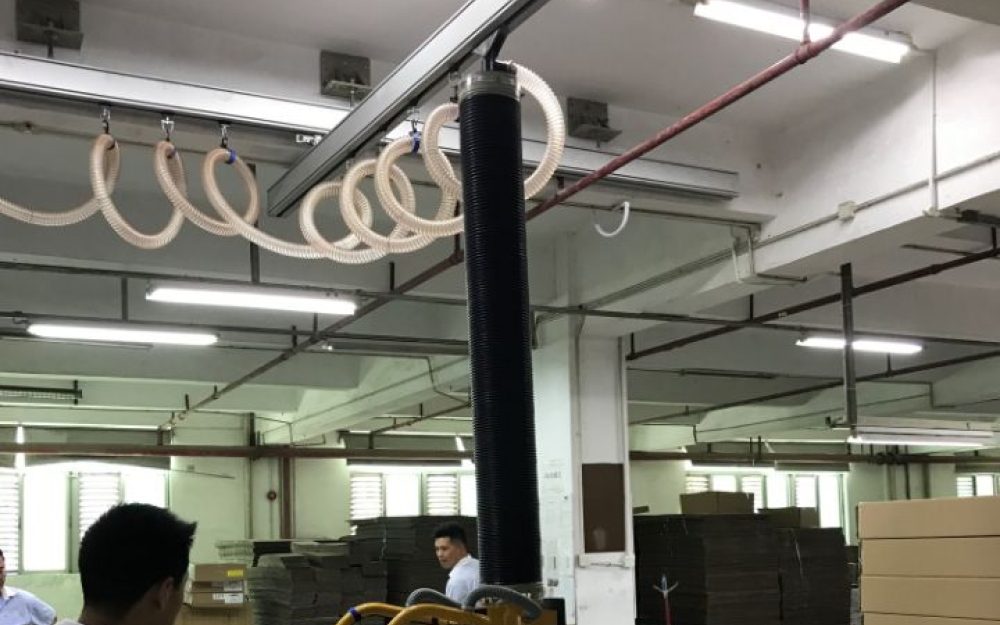
Option: Aluminium rail system
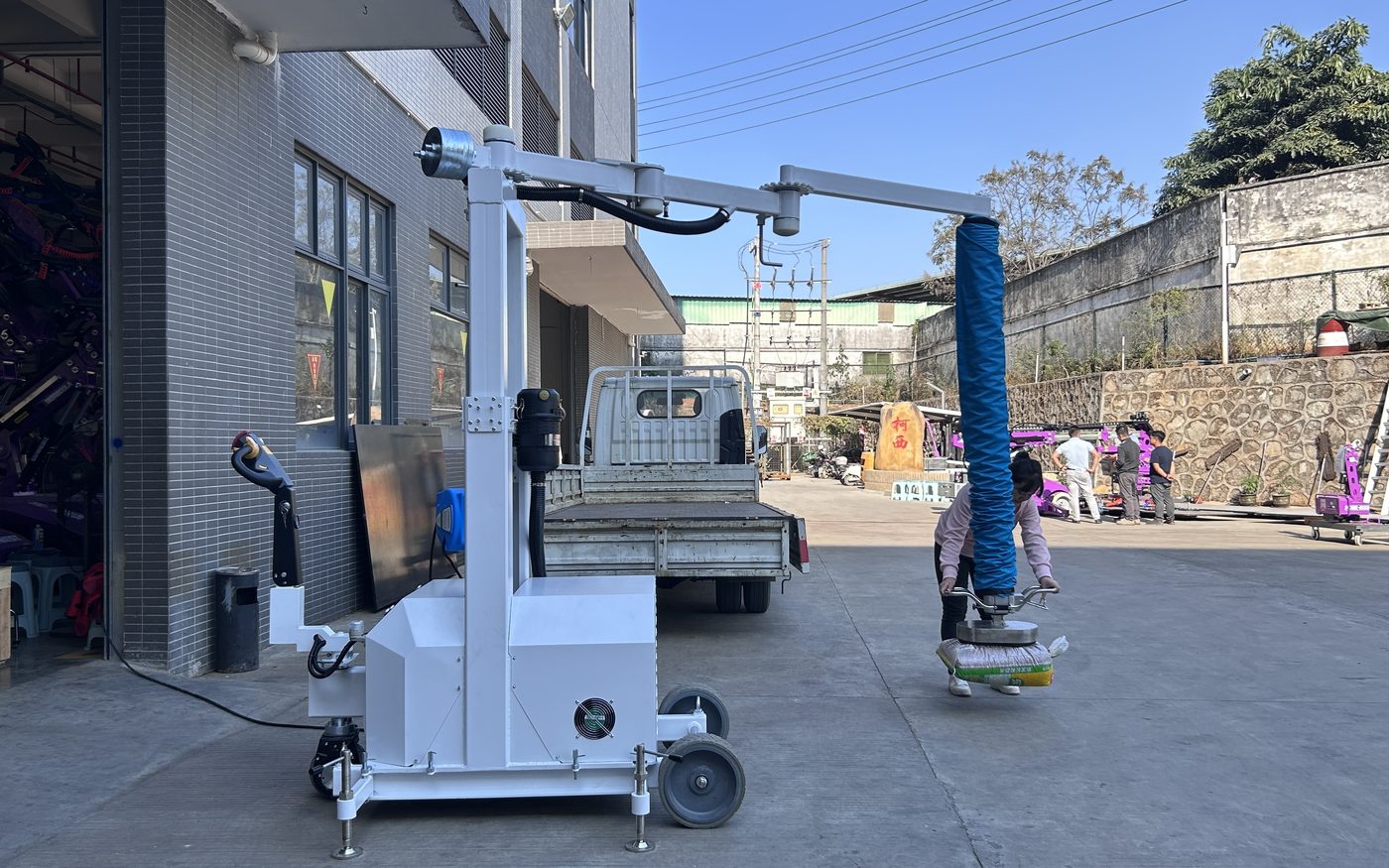
Option: Mobile column
Coverage, foundations and rail layouts are worked through on the jib cranes and rails for vacuum lifters page.
| Your situation | Usual choice | Why |
|---|---|---|
| A single pallet-to-conveyor station within 5 m of the column, sound floor | Pillar jib crane, 270° | Low investment; suits slow to medium cycle rates; our WJC arms are 2.5–4.0 m |
| Many stations or a long, fast line | Aluminium rail, monorail or bridge | Large coverage, light to move; higher investment |
| Roof cannot carry a rail | Rail on a free-standing frame, supplied locally | The frame brings its own columns |
| Rented building, no drilling, or seasonal use | Mobile unit, rated 45 or 60 kg with a 3 m arm | No floor installation |
Markets
Our lifters are exported to Europe, the Americas, the Middle East and Southeast Asia; this site serves plants and distributors in Southeast Asia, the Middle East and Latin America in particular. We do not sell to sanctioned countries or regions, directly or through third countries. Read more about Cowest Machinery.
Tools and downloads
Enter load weight, horizontal and vertical positions, travel distance, frequency and coupling to get the recommended weight limit and lifting index. An assessment tool, not a product approval.
Estimate lifting capacity from tube diameter and working vacuum, then derate for porous loads and altitude. Estimates only; the factory confirms with a sample test.
The daily and weekly checklists on this page are available as a one-page PDF to print for the workstation; it carries the same industry items as the tables above and no model-specific values.
Each data sheet is a one-page PDF with the catalogue values of the series, dated and versioned; the configuration for your load is confirmed in the quotation.
| Series | Covers | File |
|---|---|---|
| ESL-SG single-handle | ESL-SG120/22 to 180/30, 35–80 kg | Download PDF |
| ESL-MD two-handle | ESL-MD140/22 to 300/50, 45–200 kg | Download PDF |
| ESM compact | ESM25 and ESM35, 25–35 kg | Download PDF |
| MD / AD mobile | MD-ESM, MD-SG, AD-ESM, AD-SKG, 45–60 kg | Download PDF |
| WJC pillar jib crane | 125 and 250 kg classes | Download PDF |
| AM aluminium rail | AM150 and AM250 | Download PDF |
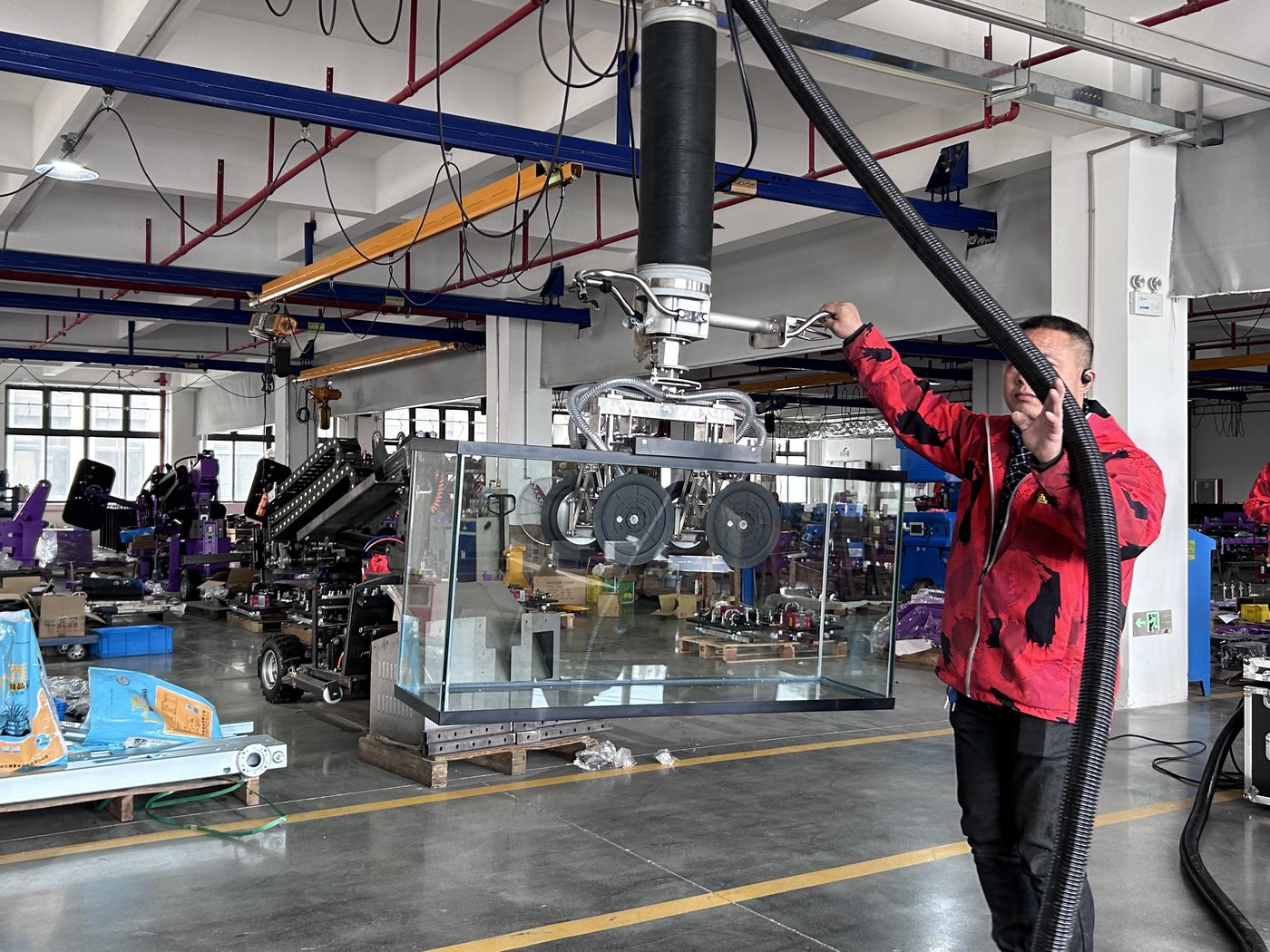
A blower or pump creates vacuum in a flexible lifting tube; the same airflow grips the load through a suction pad and contracts the tube to lift it, and the operator controls lifting and lowering with a handle.
Our four series are rated from 25 to 200 kg; in the wider industry, tube lifters are typically built for about 30 to 300 kg. The rated capacity for your load and pad is confirmed in the quotation.
Usually yes. Leaking air lowers the usable capacity, so we start a porous sack one model up, with a matching pad, and go a size down only if your samples pass the test. Send 3–5 sample sacks and we share the test video before you order.
Where the lifter has a non-return valve, the valve shuts and the load sinks slowly under control instead of dropping, and a porous load sinks faster. Check the safety functions in your model's manual, and keep everyone clear of a suspended load.
Our standard supply is 380 V three-phase. Give your plant's voltage, frequency and phases in the enquiry; whether another voltage or 60 Hz can be supplied is confirmed before the order.
The one whose ratings cover your heaviest load: the ESM for small loads up to 35 kg, the ESL-SG for light frequent lifts, the ESL-MD from about 50 kg up to 200 kg, and the mobile units when the work moves.
Up to 200 kg on the ESL-MD300/50 for an airtight load; anything heavier is outside our tube lifter range.
Often, by changing the pad, as long as each load stays within what the model holds for that surface; the tooling table above shows what is listed per series.
The fixed series do, with other voltages and 60 Hz on request; the mobile units work from 12 V deep-cycle batteries.
Both are stated in the quotation for your configuration, together with the payment terms.
Yes in most cases, on a model chosen one size up and a sack pad that suits the bag; the leak through the paper lowers capacity and speed, and a sample test with your own sacks shows the effect before you order.
It depends on the walk between pick and place and how exactly each sack has to sit; several lifts a minute is a common figure for short palletising runs, not a promise, and we work out your rate from the layout.
Handling packed food in sacks is a common application. If the pad touches unpacked food, food-contact pad materials and a hygienic design are required; we offer such a configuration only with the manufacturer's material declarations. Flour and sugar dust zones are a separate question; see the industry section above.
A slack sack is drawn into the pad unless the pad has an internal support mesh; tell us the fill level, and whether we supply a mesh pad for your sack is confirmed in the quotation.
What we need from you: A quotation is only as accurate as the enquiry: load and packaging, maximum weight, dimensions, porosity, pick and place heights, lifts per hour, clear height and working radius, power supply, destination and trade term, and whether the area is a classified zone. With those, the first reply can be a proposal rather than questions.
load, heights, cycles per hour and power supply are all we need to start.
What we do not do: Explosion-proof builds and rental are not part of our offer, and neither loads above 200 kg nor glass and stone vacuum lifters fall within this site's range.
Guides