Arm length sets the reach, column height sets the clear height under the arm, and the slewing angle sets how much of the circle the crane serves. A free-standing pillar crane usually slews 270° or 360°; 180° is the wall-bracket pattern and is chosen where the column stands against a wall or a line.
Pillar Jib Crane
WJC pillar jib cranes, 125 and 250 kg
The WJC is a floor-mounted pillar jib crane made to carry a vacuum tube lifter over one workstation: two capacity classes, 125 and 250 kg, columns from 3.0 to 4.5 m, arms from 2.5 to 4.0 m, slewing through 180°, 270° or 360°, with the trolley moved by hand along the arm. It is a light crane for a lifter, not a one-tonne shop crane for a hoist. To compare it with rails and mobile columns, see all lifting systems.
- Two capacity classes, 125 and 250 kg
- Columns 3.0–4.5 m; arms 2.5–4.0 m
- Slewing through 180°, 270° or 360°
- Foundation drawing supplied with the order
Whether the 125 or the 250 kg class carries your lifter is checked in the proposal against its full suspended weight; the foundation drawing is for your structural engineer to compare with your floor.
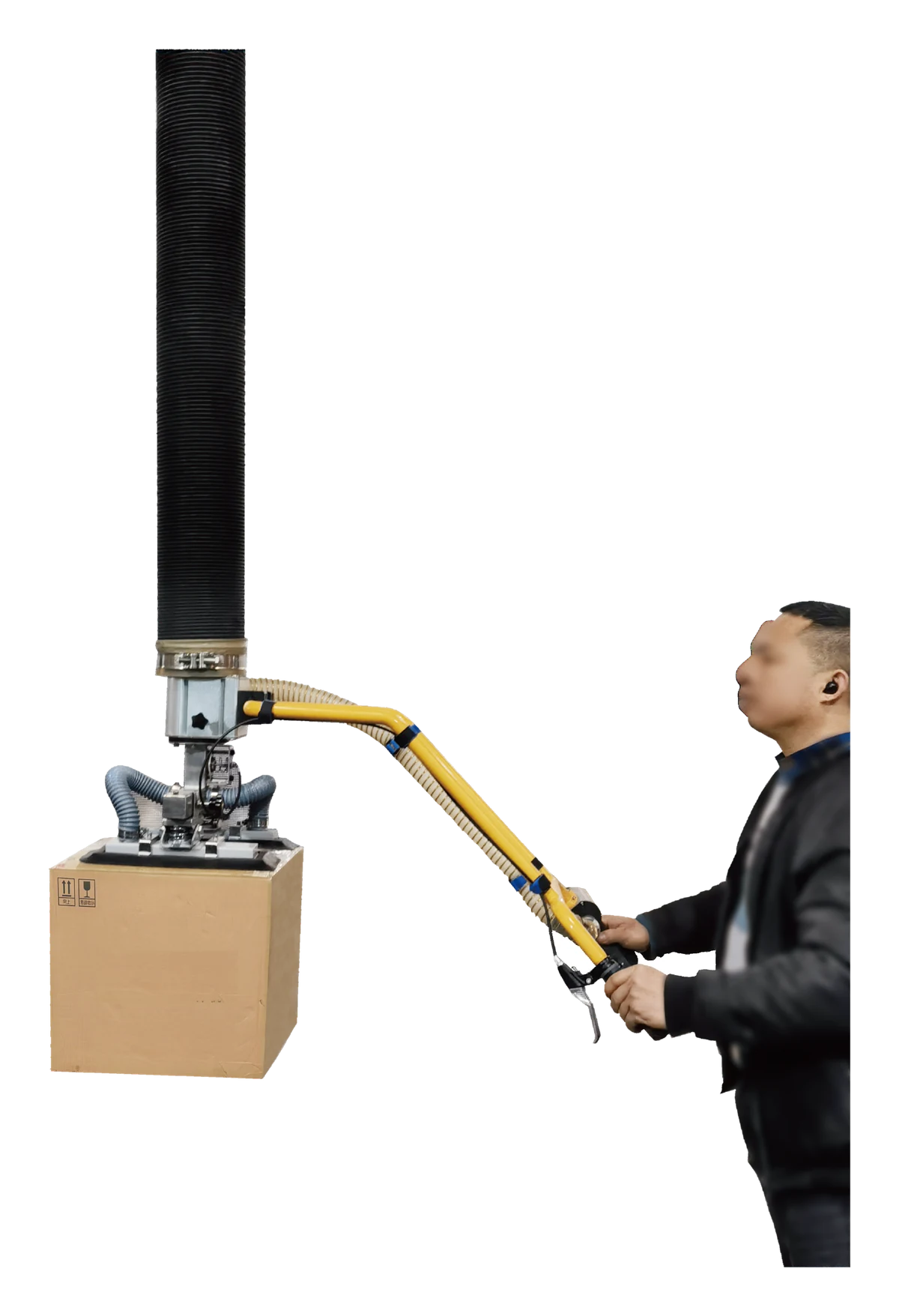
- Capacity classes:
- 125 / 250 kg
- Arm length:
- 2.5–4.0 m
- Column height:
- 3.0–4.5 m
- Slewing:
- 180° / 270° / 360°
Specifications
WJC pillar jib cranes, 125 and 250 kg
The crane class has to be higher than the lifter's rating, because the crane takes the heaviest load the lifter is rated for and, on top of it, the lifting tube, handle and pad hanging from the trolley, and the trolley itself. Which class a given ESL model needs is checked in the proposal against its full suspended weight.
| Item | WJC 125 kg class | WJC 250 kg class |
|---|---|---|
| Rated capacity | 125 kg | 250 kg |
| Column height | 3.0, 3.5, 4.0 or 4.5 m | 3.0, 3.5, 4.0 or 4.5 m |
| Arm length | 2.5, 3.0, 3.5 or 4.0 m | 2.5, 3.0, 3.5 or 4.0 m |
| Slewing | 180°, 270° or 360° | 180°, 270° or 360° |
| Travel along the arm | Manual | Manual |
| Limits | Arm length not above 5.5 m; clear height under the arm not above 4 m | Arm length not above 5.5 m; clear height under the arm not above 4 m |
| Supplied with | Foundation drawing with the order | Foundation drawing with the order |
Request a quote
tell us the lifter model, the working radius, the heights and the floor.
Dimensions
Column height, arm length and slewing
Condition: the arm length does not exceed 5.5 m and the clear height under the arm does not exceed 4 m; the overall height of lifter plus crane is checked against your beams, lights and sprinklers from the factory drawing before the order.
Coverage
Coverage area
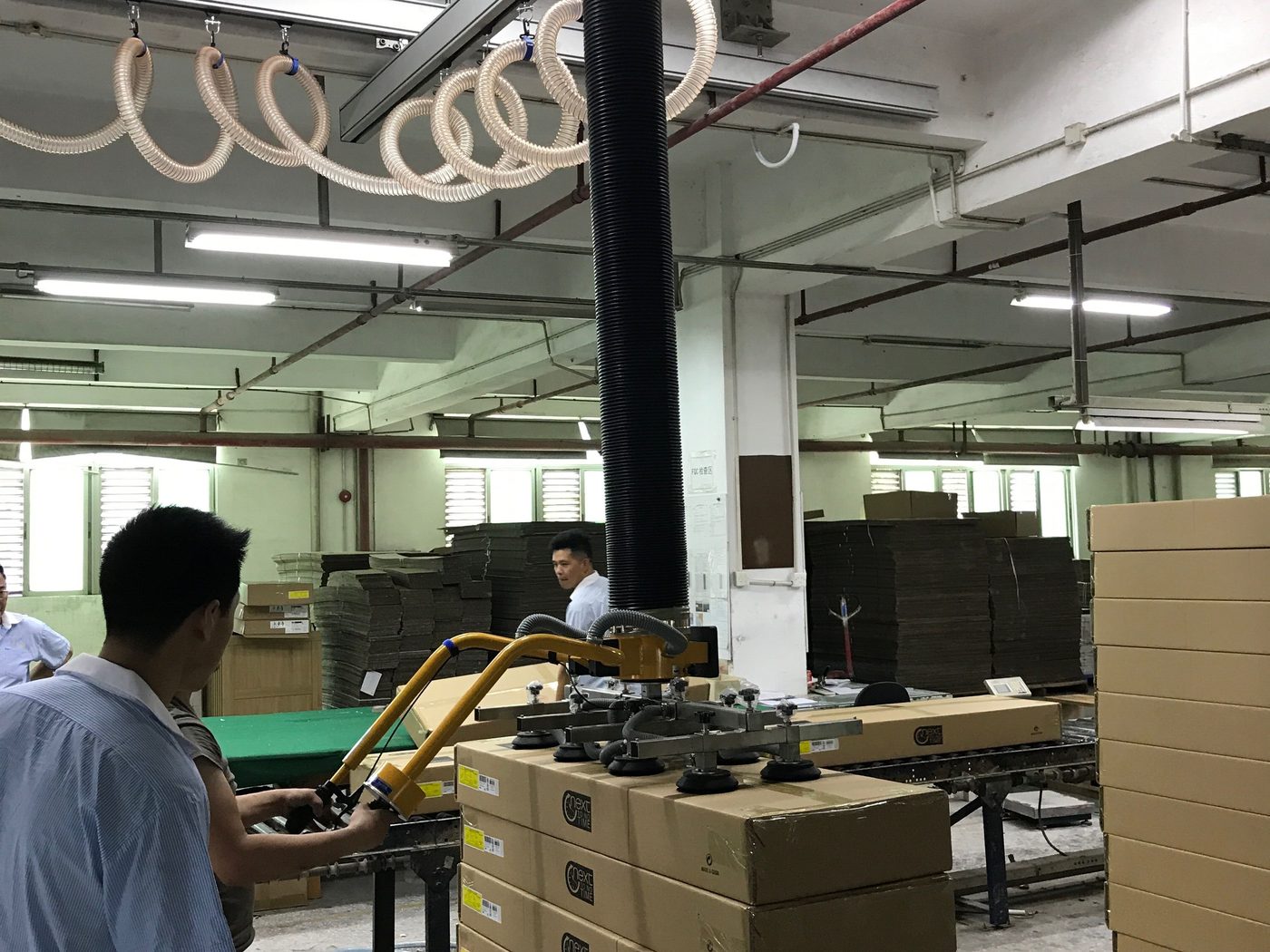
The area a jib crane serves is the slewing angle's share of a full circle, times the ring between the arm length and the dead zone next to the column. As an estimate with a 0.5 m dead zone, a 4 m arm slewing 270° covers about 37 m² and the same arm slewing 180° about 25 m².
Why it matters: the crane moves most easily when the lifter works on the outer part of the arm, so a conveyor and two pallets, for example, are placed in the outer ring, and the column goes where it blocks nothing. For a long line or a row of stations, a rail covers the ground better than one column.
Next step: send a sketch of the station with the selection form and we mark the column position and the radius on it.
Foundation
Foundation and floor
Matching
Matching the crane to the lifter
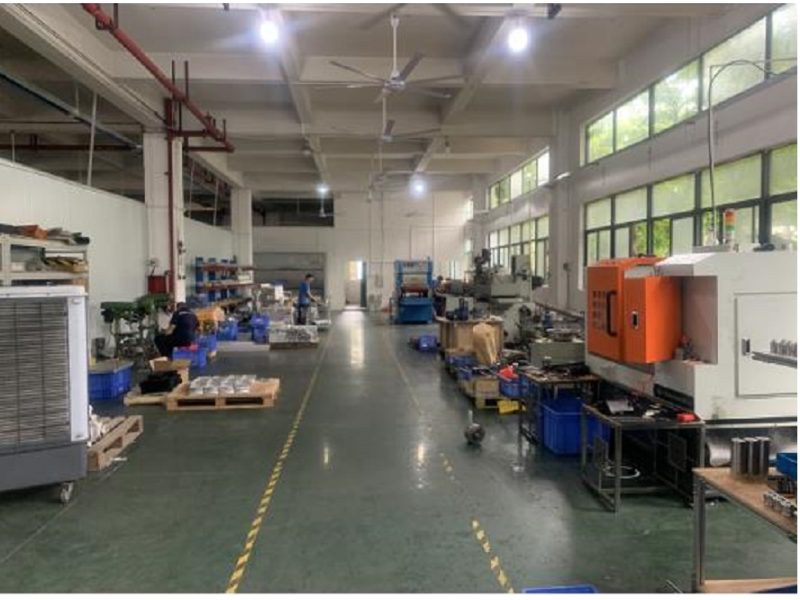
Three rules: the crane class covers the lifter's rated capacity plus the weight of tube, handle, pad and trolley; the arm is installed level, otherwise the lifter drifts along it on its own; and the lifter's travel is not restricted with stop devices unless both the lifter and crane suppliers have confirmed it in writing. The unit weights of our lifters are confirmed in the proposal, where the crane class is checked against the full suspended weight.
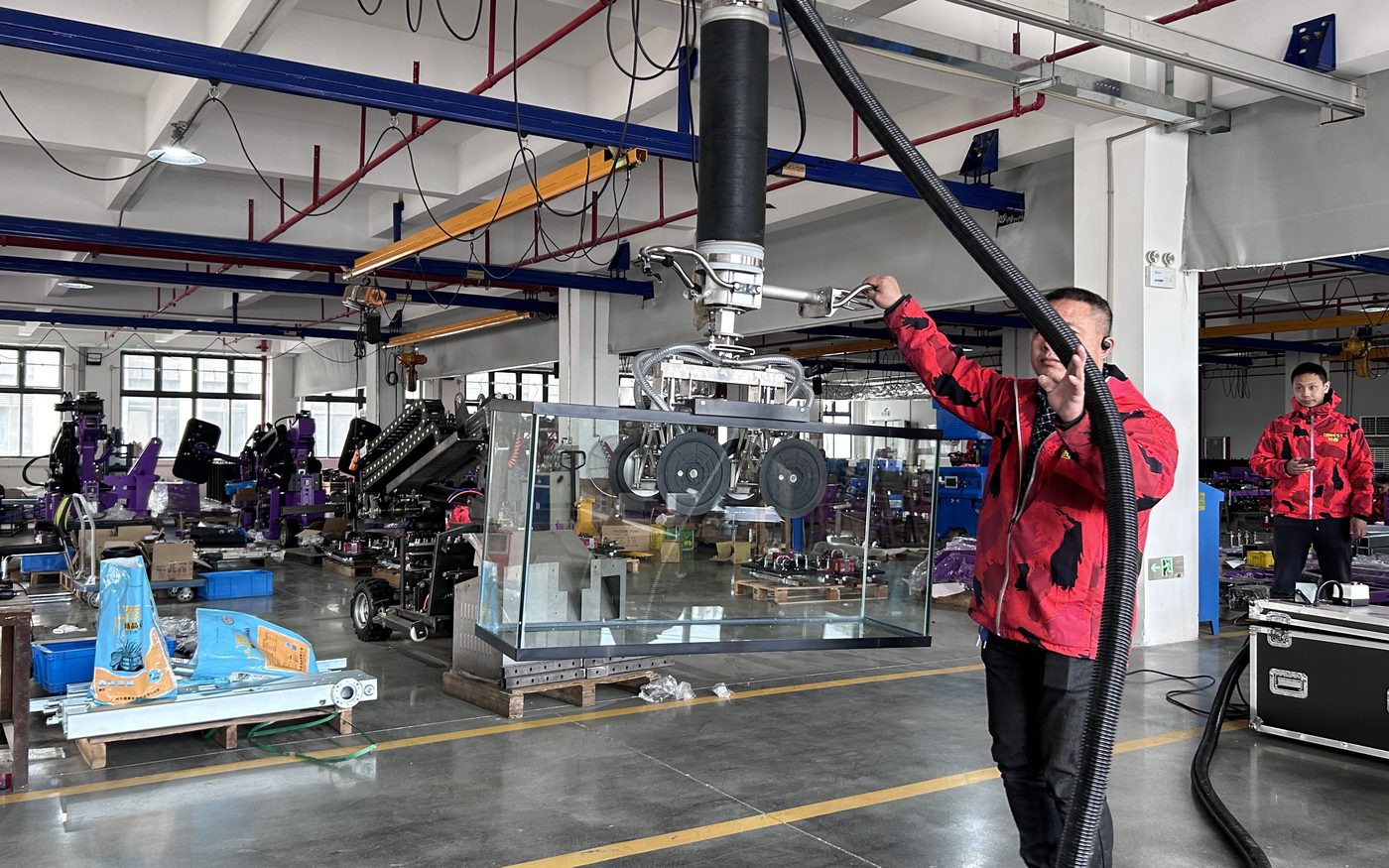
Next step: see the two-handle ESL-MD lifters up to 200 kg; for each model the crane class is checked in the proposal against the full suspended weight.
Request a quote
To propose a WJC we need: the lifter model or the load it will carry, the working radius and a sketch of the station, the minimum pick and maximum place heights, the clear height under the beams, the floor type and thickness, and who will install.
- Station: working radius, pick and place points, obstacles
- Building: clear height, slab thickness and grade, joints and cracks nearby
- Lifter: the model you have in mind, or the heaviest load and lifts per hour
- Fitting: who sets the column, and how it gets into the building
Scope
What the WJC does not cover
No WJC is rated above 250 kg, and no arm in the catalogue is longer than 4.0 m. Wall-mounted and gantry cranes are not in our catalogue, and the calculation for your slab or foundation is left to your own structural engineer.
Cowest Machinery designs and manufactures vacuum tube lifters at its factory in Qingyuan, Guangdong, China; the WJC is the pillar jib crane its catalogue offers to carry them.