Applications
Choose vacuum lifting equipment by what you lift
Manual handling equipment is chosen from the load backwards: what you lift decides which pads fit, the pad decides the series, and the load's surface decides whether vacuum is the right method at all. This page is the map: one table from load type to the recommended Cowest series and pad, a short porosity check, an honest list of loads we do not recommend vacuum for, and where to send a sample.
- One table from load type to series and pad
- Four porosity classes and what each costs in capacity
- Twelve cases where a standard tube lifter needs a test, a change or another tool
- Samples tested when the load is porous or unusual
Our recommendations begin from catalogue ratings for airtight loads; cartons are planned at a reduced share, and porous loads are checked with your own samples before a model is quoted.
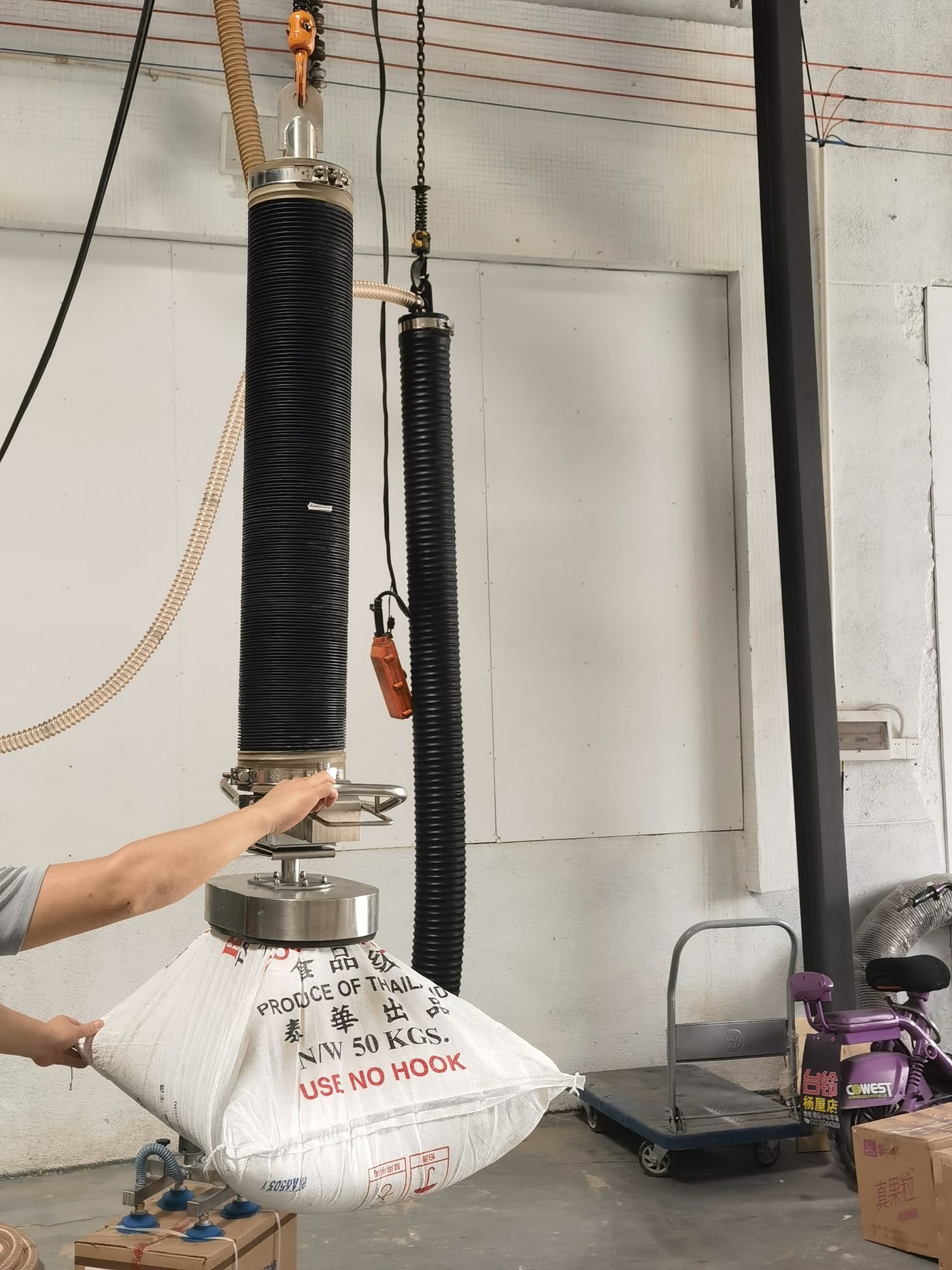
- Sacks:
- 25–50 kg
- Cartons:
- up to about 90 kg
- Drums:
- up to 80 kg
- Porosity classes:
- 4
Load pages
Sacks, cartons and drums in detail
Three load types have a page of their own, with the model table, the pad and the conditions that go with each.
-
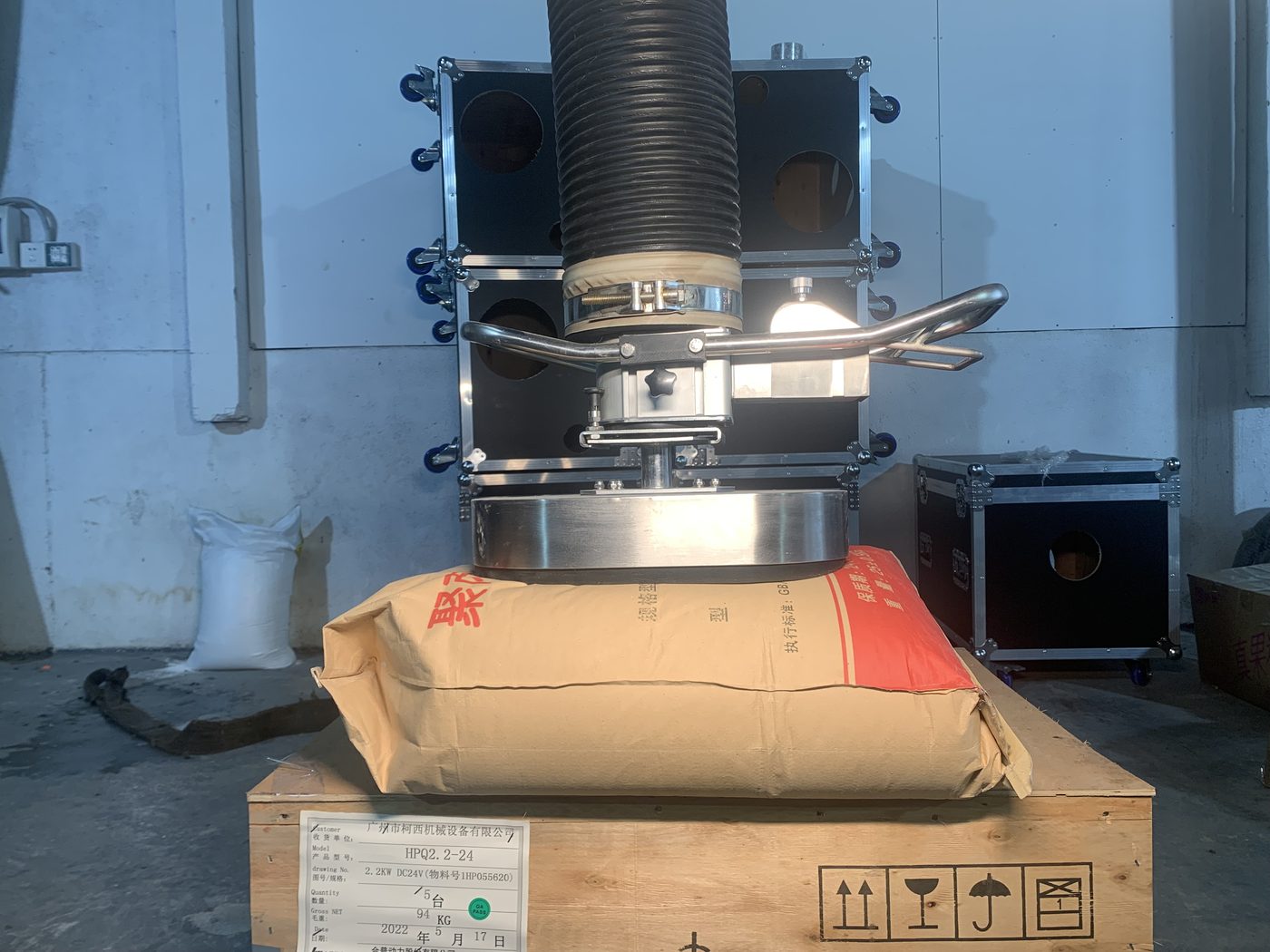
Sacks and bags, 25 to 50 kg
Film, lined and plain paper sacks, how porosity moves the model, four industries, a palletising layout, national lifting limits and a payback example: Sacks and bags.
View the series -
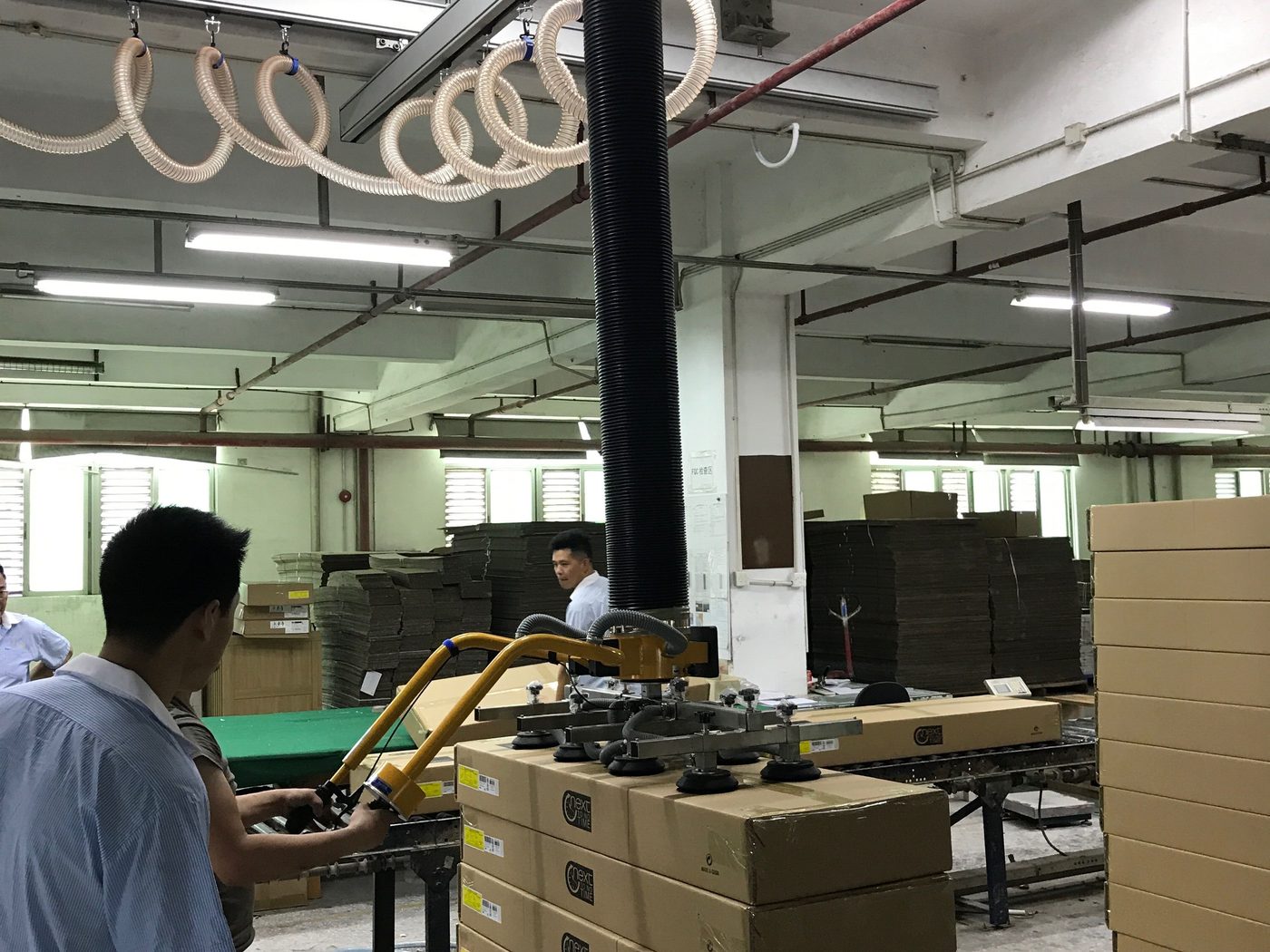
Cartons and cases, up to about 90 kg
Carton bands from about 18 to 90 kg, split-top and open boxes, picking stations and a worked layout: Cartons and boxes.
View the series -
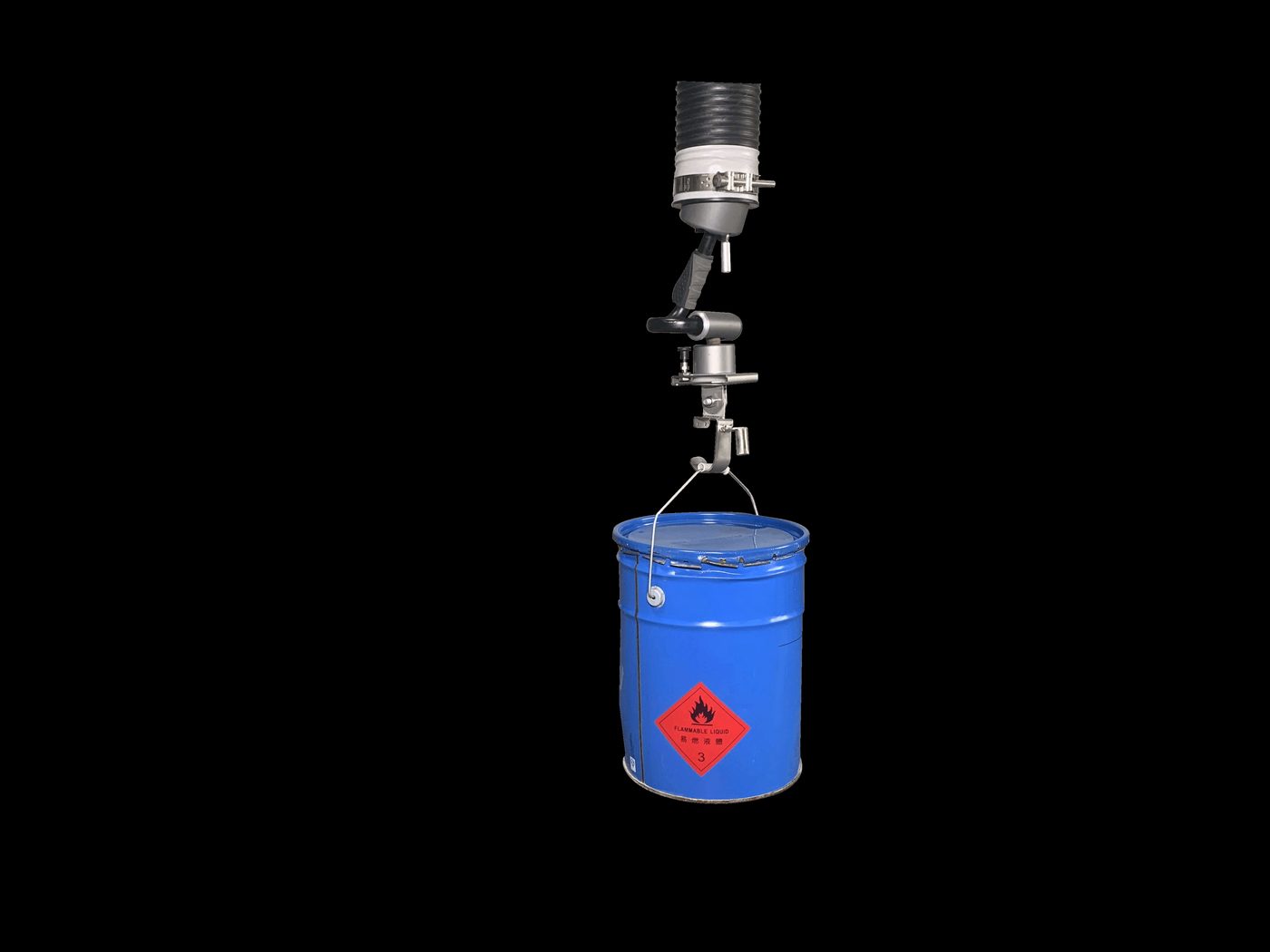
Drums and pails, up to 80 kg
Round drum pads on three ESL-MD models, lifting from the top, chemical drums, and pails on a bellows pad or a hook: vacuum drum lifter.
View the series
Load types
Load type → recommended setup
Find your load in the first column; the weight range, series and pad next to it are where a proposal starts.
| You lift | Weight range we cover | Recommended series | Pad | Go to |
|---|---|---|---|---|
| Sacks and bags (paper, film, laminated woven) | 25–50 kg sacks | Fast 25 kg work on the single-handle ESL-SG; 25–50 kg, and a 90° tilt to order, on the two-handle ESL-MD, with the tilt rating stated in the quotation | Sack pads SUS190×290R / SUS230×380R; the pad for the ESL-MD200/40 and above, and any support mesh for slack sacks, is confirmed in the quotation | Sacks and bags |
| Cartons, cases and lidded totes | Cartons to about 90 kg (semi-porous, sized at 75% of rated capacity) | ESM compact (rated 25–35 kg) for cartons to about 26 kg; ESL-SG single-handle (rated 35–80 kg, 80 kg per catalogue) to about 60 kg; ESL-MD for heavy cases | Carton pads SFD / HB; a double pad for split tops is the usual industry solution, ask us | Cartons and boxes |
| Drums and pails: steel, plastic, fibre | Drums up to 80 kg rated; heavier drums: ask us; pails on the ESL-SG and ESM | ESL-MD140 to 180 for drums; ESL-SG with bellows pads for drums and pails; ESM with hook SHP for pails, protection valve confirmed in the quotation | Round shaped drum pads; HB bellows pads; stainless-steel hook SHP | vacuum drum lifter |
| Sheets, boards and panels | Ask us | Tell us panel size, thickness, material and whether it must be turned vertical; we confirm before quoting whether an ESL-MD setup can do it | Pad configuration confirmed by the factory; double or four-pad yokes are the usual industry solution | Describe your load in the form |
Each weight range above starts from catalogue ratings for airtight loads and is confirmed for anything porous by a test with your samples. Series against series is set out on compare the four series.
begin with the load, its weight and packaging, and add a photo if you have one.
Porosity
Airtight, semi-porous or porous?
| Class | Typical loads | Typical usable capacity (industry estimate, share of rated) | Selection consequence |
|---|---|---|---|
| Airtight | Film bags, sheet steel, film-wrapped units, drums other than fibre | 100% | Standard pad; sized on the catalogue value |
| Semi-porous | Cartons, lined paper sacks, coated woven bags | 75–90% | Good seal; moderate derating |
| Porous | Unlined multi-wall paper sacks, chipboard | 50–80% | More airflow, which on the ESL range means choosing the model, since each has its own 2.2–5.0 kW blower; a larger pad and soft seal; sample test |
| Highly porous | Uncoated woven PP bags, jute, cloth bags | Often not on vacuum alone | Sample test; if vacuum fails, a mechanical gripper is the usual industry answer |
Fit check
Loads we do not recommend vacuum for
Where vacuum is the wrong tool, and what we suggest instead
-
Case
Uncoated woven, jute, cloth and laundry bags
Why
Too much air leaks to build and hold vacuum
Usual alternative (industry practice)
Sample test; otherwise a mechanical bag gripper
-
Case
Oily, wet, dusty or dirty surfaces
Why
Loose material breaks the seal; drops have happened in the industry
Usual alternative (industry practice)
Clean the surface; oil-resistant pads with friction pads; mechanical clamping
-
Case
Sharp edges and abrasive loads
Why
They cut the seal and can tear the lifting tube, which can drop the load
Usual alternative (industry practice)
Wear-resistant seals, edge protection, mechanical clamping
-
Case
Single items above about 300 kg
Why
Beyond the normal range of tube lifters; our range ends at 200 kg
Usual alternative (industry practice)
Vacuum lifting devices (vacuum lifting beams), outside this range
-
Case
Hot surfaces
Why
Standard seals have limited temperature resistance
Usual alternative (industry practice)
Silicone foam seals or mechanical clamping, confirmed case by case
-
Case
Open-top boxes, shifting contents, slack sacks, off-centre loads
Why
The seal tears or the load tips
Usual alternative (industry practice)
Swivel to keep the tube vertical, support mesh, double pads, or a fork or tray tool
-
Case
Very small items, below about 200×200 mm
Why
Too small for the pad to seal
Usual alternative (industry practice)
Small pad on a single-handle unit, or a mechanical gripper
-
Case
Oversize panels
Why
Beyond the size a tube lifter handles; large panels flex
Usual alternative (industry practice)
Vacuum lifting device with a multi-pad beam
-
Case
Classified explosive atmospheres
Why
Standard units are not for hazardous zones
Usual alternative (industry practice)
Standard version, not for explosive atmospheres; we do not offer explosion-proof versions. Tell us the zone in the form; if the area is classified, we say so before quoting
-
Case
Cold stores and outdoor use
Why
Some manufacturers specify indoor use above +5 °C only, and no cold-store or outdoor rating is published for our units
Usual alternative (industry practice)
Factory confirmation in writing before quoting
-
Case
Sites above about 1,500 m without derating
Why
At 3,000 m only about 69% of sea-level capacity is left
Usual alternative (industry practice)
Larger tube or vacuum source, derated for altitude
-
Case
Hooks or mechanical tools without a protection valve
Why
If the load slips, the tube snaps upward
Usual alternative (industry practice)
Fit the protection valve
By industry
The same four load types come up in most industries; what changes is the hygiene, dust and hazardous-area requirements around them.
| Industry | Typical loads | Start with | Watch for |
|---|---|---|---|
| Food and beverage | 20–50 kg paper and film sacks, cartons | Sacks and bags; cartons | Hygienic design, food-contact pads, combustible dust zones |
| Feed and agriculture | 25–50 kg paper and woven sacks | Sacks and bags | Woven bags are sample-tested; dust |
| Chemicals and plastics | 25 kg PE film bags, drums, pails | Sacks and bags; drums | Hazardous zones; corrosion resistance |
| Building materials | 25–50 kg cement, mortar and tile-adhesive sacks, tile cartons | Sacks and bags | Heavy dust and abrasion: wear-resistant seals and large filters |
| Logistics, warehousing, e-commerce | 5–50 kg cartons | Cartons and boxes | Changing box sizes; mobile units for several docks |
| Pharmaceutical | Sacks, fibre drums, pails | Sacks and bags; drums | Stainless hygienic design, cleanroom and hazardous-zone rules |
| Drums, kegs, tyres, panels, sheet metal, automotive parts | Special pads and grippers | Ask us | Each needs its own pad or gripper and a sample test |
Not sure? Send a sample
load, weight, size, packaging, a photo, pick and place heights, lifts per hour and power supply.
Porous, slippery or unusual loads are tested before we quote: three to five real items go to our factory, are lifted on the lifter and pad we propose, and the video comes back to you. The result shows how much of the rating the load keeps, which pad size suits it, and whether a support mesh or skirt seal is needed. Test conditions are agreed in advance.
Scope
What this site does not cover
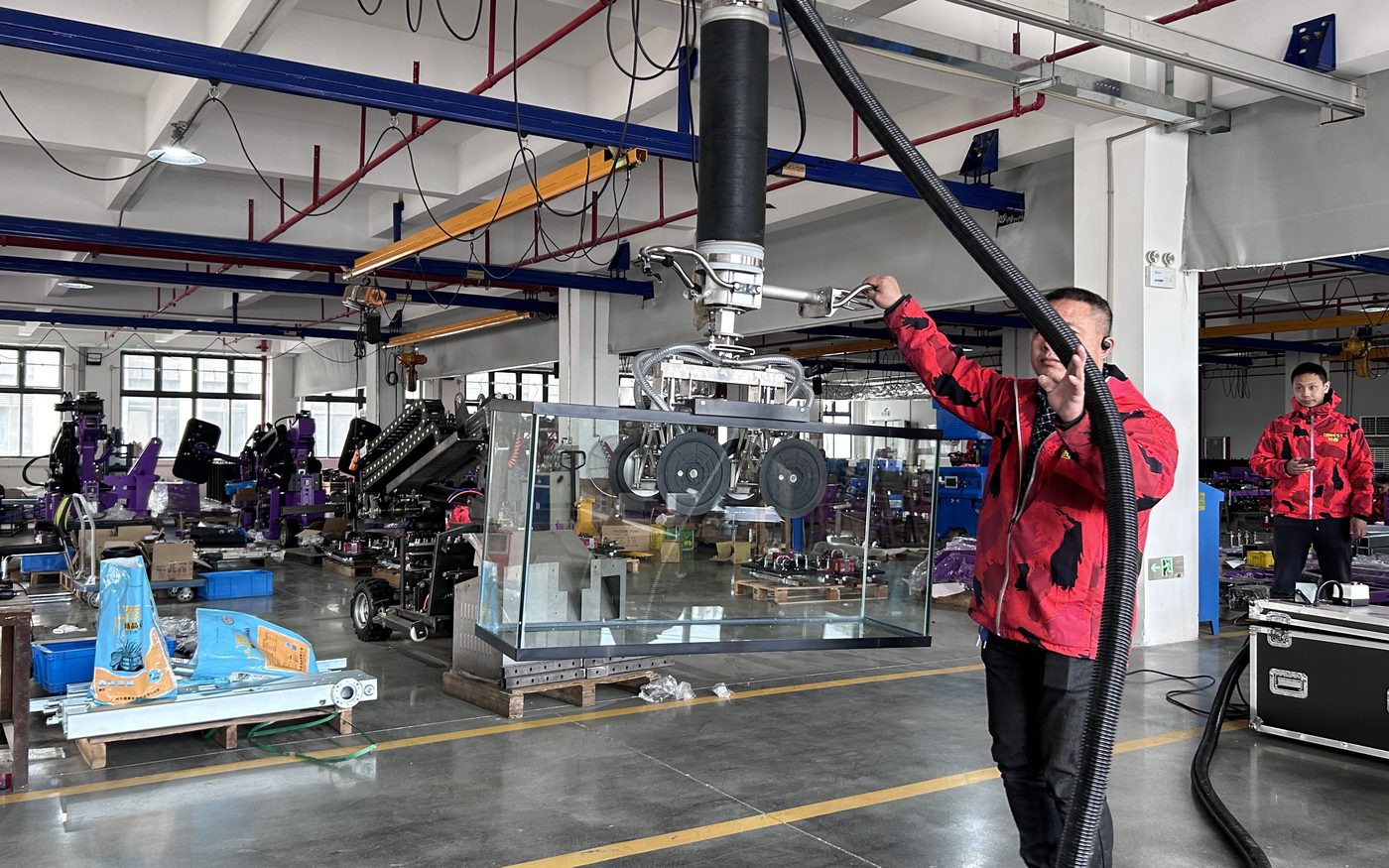
Above 200 kg we have no tube lifter, and we neither rent units nor build explosion-proof ones. Vacuum lifters for glass and stone are not offered here either.
Cowest Machinery designs and manufactures vacuum tube lifters at its factory in Qingyuan, Guangdong, China; the lifters are CE marked, with Attestation of Conformity No. CE-1629-01-011123 (CGS Test, valid to 2028) available on request.